

Unity Rolls Back Runtime Fee Policy After Backlash
Unity has recently faced criticism from developers following the announcement of a new Runtime Fee policy. Under this policy, developers would be charged a fee for each copy of their game installed beyond a certain limit.
In response to the backlash, on Friday, March Whitten, lead of Unity Create, issued an “open letter” to the Unity community, apologizing for the way the policy was rolled out and introducing several changes.
The revised policy states that the Runtime Fee will not be applied to games created using Unity Personal, the entry-level service model. Additionally, the fee will only be implemented for games built on the next LTS version of Unity, slated for release in 2024 and beyond.
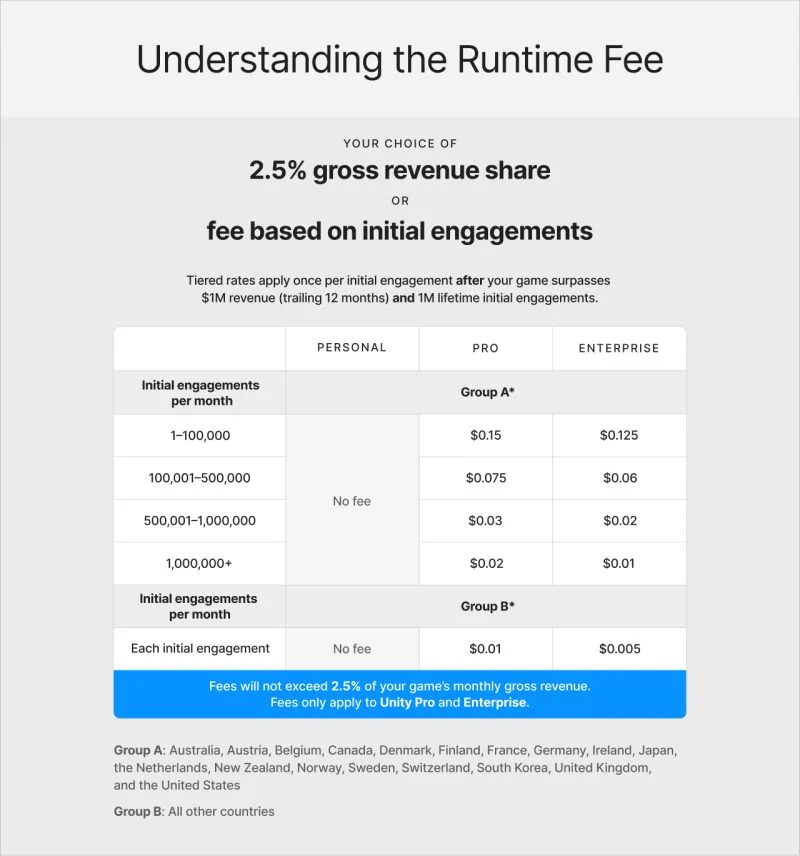
Existing games developed on previous versions of Unity will not be subject to the Runtime Fee. Furthermore, instead of charging based on installs, the fee will be based on the first engagement players have with a game. Developers can choose between a 2.5% revenue share or an amount determined by engagements.
In conclusion, Whitten announced a live fireside chat session where he and Jason Weimann will answer developer questions in real-time.
While these changes are a step in the right direction, many developers wonder how Unity arrived at this point in the first place. Some argue that Unity could have anticipated the negative response from the developer community.
Unity’s executives selling shares and the company subsequently revising its terms of service to make the Runtime Fee less legally vulnerable further erodes developers’ trust in the company.
It remains to be seen whether developers will choose to continue using Unity for future projects, considering the revised fee policy will not take effect until 2024.
Source – [Unity]
Unity Rolls Back Runtime Fee Policy After Backlash
Unity has recently faced criticism from developers following the announcement of a new Runtime Fee policy. Under this policy, developers would be charged a fee for each copy of their game installed beyond a certain limit.
In response to the backlash, on Friday, March Whitten, lead of Unity Create, issued an “open letter” to the Unity community, apologizing for the way the policy was rolled out and introducing several changes.
The revised policy states that the Runtime Fee will not be applied to games created using Unity Personal, the entry-level service model. Additionally, the fee will only be implemented for games built on the next LTS version of Unity, slated for release in 2024 and beyond.
Existing games developed on previous versions of Unity will not be subject to the Runtime Fee. Furthermore, instead of charging based on installs, the fee will be based on the first engagement players have with a game. Developers can choose between a 2.5% revenue share or an amount determined by engagements.
In conclusion, Whitten announced a live fireside chat session where he and Jason Weimann will answer developer questions in real-time.
While these changes are a step in the right direction, many developers wonder how Unity arrived at this point in the first place. Some argue that Unity could have anticipated the negative response from the developer community.
Unity’s executives selling shares and the company subsequently revising its terms of service to make the Runtime Fee less legally vulnerable further erodes developers’ trust in the company.
It remains to be seen whether developers will choose to continue using Unity for future projects, considering the revised fee policy will not take effect until 2024.
Source – [Unity]
Unity Rolls Back Runtime Fee Policy After Backlash
Unity has recently faced criticism from developers following the announcement of a new Runtime Fee policy. Under this policy, developers would be charged a fee for each copy of their game installed beyond a certain limit.
In response to the backlash, on Friday, March Whitten, lead of Unity Create, issued an “open letter” to the Unity community, apologizing for the way the policy was rolled out and introducing several changes.
The revised policy states that the Runtime Fee will not be applied to games created using Unity Personal, the entry-level service model. Additionally, the fee will only be implemented for games built on the next LTS version of Unity, slated for release in 2024 and beyond.
Existing games developed on previous versions of Unity will not be subject to the Runtime Fee. Furthermore, instead of charging based on installs, the fee will be based on the first engagement players have with a game. Developers can choose between a 2.5% revenue share or an amount determined by engagements.
In conclusion, Whitten announced a live fireside chat session where he and Jason Weimann will answer developer questions in real-time.
While these changes are a step in the right direction, many developers wonder how Unity arrived at this point in the first place. Some argue that Unity could have anticipated the negative response from the developer community.
Unity’s executives selling shares and the company subsequently revising its terms of service to make the Runtime Fee less legally vulnerable further erodes developers’ trust in the company.
It remains to be seen whether developers will choose to continue using Unity for future projects, considering the revised fee policy will not take effect until 2024.
Source – [Unity]
Unity Rolls Back Runtime Fee Policy After Backlash
Unity has recently faced criticism from developers following the announcement of a new Runtime Fee policy. Under this policy, developers would be charged a fee for each copy of their game installed beyond a certain limit.
In response to the backlash, on Friday, March Whitten, lead of Unity Create, issued an “open letter” to the Unity community, apologizing for the way the policy was rolled out and introducing several changes.
The revised policy states that the Runtime Fee will not be applied to games created using Unity Personal, the entry-level service model. Additionally, the fee will only be implemented for games built on the next LTS version of Unity, slated for release in 2024 and beyond.
Existing games developed on previous versions of Unity will not be subject to the Runtime Fee. Furthermore, instead of charging based on installs, the fee will be based on the first engagement players have with a game. Developers can choose between a 2.5% revenue share or an amount determined by engagements.
In conclusion, Whitten announced a live fireside chat session where he and Jason Weimann will answer developer questions in real-time.
While these changes are a step in the right direction, many developers wonder how Unity arrived at this point in the first place. Some argue that Unity could have anticipated the negative response from the developer community.
Unity’s executives selling shares and the company subsequently revising its terms of service to make the Runtime Fee less legally vulnerable further erodes developers’ trust in the company.
It remains to be seen whether developers will choose to continue using Unity for future projects, considering the revised fee policy will not take effect until 2024.
Source – [Unity]
Unity Rolls Back Runtime Fee Policy After Backlash
Unity has recently faced criticism from developers following the announcement of a new Runtime Fee policy. Under this policy, developers would be charged a fee for each copy of their game installed beyond a certain limit.
In response to the backlash, on Friday, March Whitten, lead of Unity Create, issued an “open letter” to the Unity community, apologizing for the way the policy was rolled out and introducing several changes.
The revised policy states that the Runtime Fee will not be applied to games created using Unity Personal, the entry-level service model. Additionally, the fee will only be implemented for games built on the next LTS version of Unity, slated for release in 2024 and beyond.
Existing games developed on previous versions of Unity will not be subject to the Runtime Fee. Furthermore, instead of charging based on installs, the fee will be based on the first engagement players have with a game. Developers can choose between a 2.5% revenue share or an amount determined by engagements.
In conclusion, Whitten announced a live fireside chat session where he and Jason Weimann will answer developer questions in real-time.
While these changes are a step in the right direction, many developers wonder how Unity arrived at this point in the first place. Some argue that Unity could have anticipated the negative response from the developer community.
Unity’s executives selling shares and the company subsequently revising its terms of service to make the Runtime Fee less legally vulnerable further erodes developers’ trust in the company.
It remains to be seen whether developers will choose to continue using Unity for future projects, considering the revised fee policy will not take effect until 2024.
Source – [Unity]
Unity Rolls Back Runtime Fee Policy After Backlash
Unity has recently faced criticism from developers following the announcement of a new Runtime Fee policy. Under this policy, developers would be charged a fee for each copy of their game installed beyond a certain limit.
In response to the backlash, on Friday, March Whitten, lead of Unity Create, issued an “open letter” to the Unity community, apologizing for the way the policy was rolled out and introducing several changes.
The revised policy states that the Runtime Fee will not be applied to games created using Unity Personal, the entry-level service model. Additionally, the fee will only be implemented for games built on the next LTS version of Unity, slated for release in 2024 and beyond.
Existing games developed on previous versions of Unity will not be subject to the Runtime Fee. Furthermore, instead of charging based on installs, the fee will be based on the first engagement players have with a game. Developers can choose between a 2.5% revenue share or an amount determined by engagements.
In conclusion, Whitten announced a live fireside chat session where he and Jason Weimann will answer developer questions in real-time.
While these changes are a step in the right direction, many developers wonder how Unity arrived at this point in the first place. Some argue that Unity could have anticipated the negative response from the developer community.
Unity’s executives selling shares and the company subsequently revising its terms of service to make the Runtime Fee less legally vulnerable further erodes developers’ trust in the company.
It remains to be seen whether developers will choose to continue using Unity for future projects, considering the revised fee policy will not take effect until 2024.
Source – [Unity]
Unity Rolls Back Runtime Fee Policy After Backlash
Unity has recently faced criticism from developers following the announcement of a new Runtime Fee policy. Under this policy, developers would be charged a fee for each copy of their game installed beyond a certain limit.
In response to the backlash, on Friday, March Whitten, lead of Unity Create, issued an “open letter” to the Unity community, apologizing for the way the policy was rolled out and introducing several changes.
The revised policy states that the Runtime Fee will not be applied to games created using Unity Personal, the entry-level service model. Additionally, the fee will only be implemented for games built on the next LTS version of Unity, slated for release in 2024 and beyond.
Existing games developed on previous versions of Unity will not be subject to the Runtime Fee. Furthermore, instead of charging based on installs, the fee will be based on the first engagement players have with a game. Developers can choose between a 2.5% revenue share or an amount determined by engagements.
In conclusion, Whitten announced a live fireside chat session where he and Jason Weimann will answer developer questions in real-time.
While these changes are a step in the right direction, many developers wonder how Unity arrived at this point in the first place. Some argue that Unity could have anticipated the negative response from the developer community.
Unity’s executives selling shares and the company subsequently revising its terms of service to make the Runtime Fee less legally vulnerable further erodes developers’ trust in the company.
It remains to be seen whether developers will choose to continue using Unity for future projects, considering the revised fee policy will not take effect until 2024.
Source – [Unity]
Unity Rolls Back Runtime Fee Policy After Backlash
Unity has recently faced criticism from developers following the announcement of a new Runtime Fee policy. Under this policy, developers would be charged a fee for each copy of their game installed beyond a certain limit.
In response to the backlash, on Friday, March Whitten, lead of Unity Create, issued an “open letter” to the Unity community, apologizing for the way the policy was rolled out and introducing several changes.
The revised policy states that the Runtime Fee will not be applied to games created using Unity Personal, the entry-level service model. Additionally, the fee will only be implemented for games built on the next LTS version of Unity, slated for release in 2024 and beyond.
Existing games developed on previous versions of Unity will not be subject to the Runtime Fee. Furthermore, instead of charging based on installs, the fee will be based on the first engagement players have with a game. Developers can choose between a 2.5% revenue share or an amount determined by engagements.
In conclusion, Whitten announced a live fireside chat session where he and Jason Weimann will answer developer questions in real-time.
While these changes are a step in the right direction, many developers wonder how Unity arrived at this point in the first place. Some argue that Unity could have anticipated the negative response from the developer community.
Unity’s executives selling shares and the company subsequently revising its terms of service to make the Runtime Fee less legally vulnerable further erodes developers’ trust in the company.
It remains to be seen whether developers will choose to continue using Unity for future projects, considering the revised fee policy will not take effect until 2024.
Source – [Unity]