

The global foldable smartphone market is witnessing a divergence in design philosophy as major manufacturers target different user priorities. While Apple has entered the category with the iPhone Duo, focusing on a simplified, software-first experience, Vivo is positioning its X Fold 6 as a “pro-grade” hardware alternative for users who find Apple’s first-generation constraints too restrictive.
The technical gap between the two devices is most evident in power management and optics. The Vivo X Fold 6 is equipped with a 6,900mAh battery, utilizing third-generation silicon-carbon technology. This specific chemistry allows for approximately 20% higher energy density than traditional lithium-ion cells, enabling a high capacity without significantly increasing the device’s thickness. In contrast, Apple has stated the iPhone Duo offers up to 24 hours of typical use per charge, though it lacks the 80W wired and 40W wireless charging speeds found on the Vivo flagship.

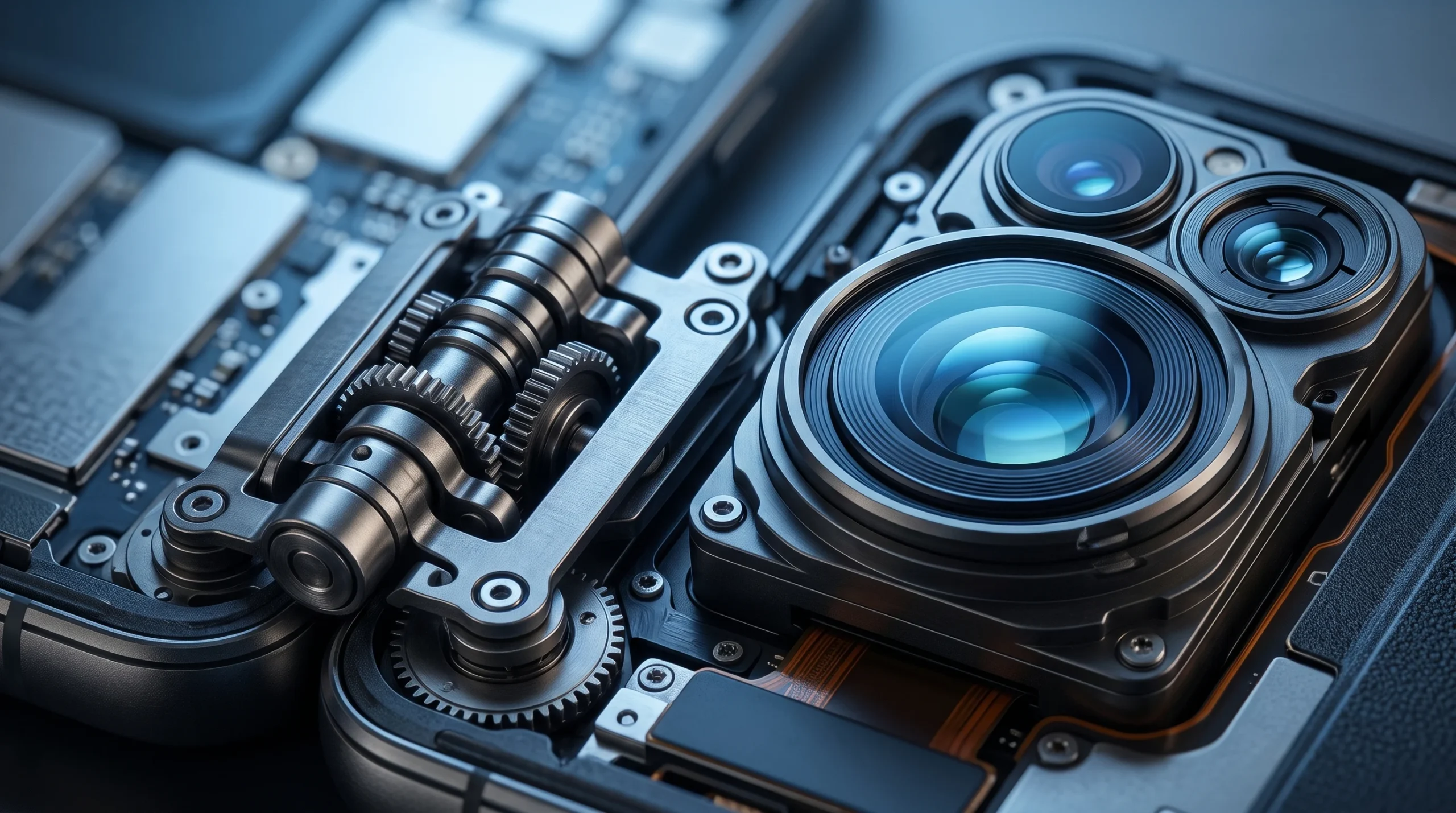
Photography marks another point of separation. The X Fold 6 features a 200MP main sensor (1/1.4-inch) and a 50MP ultra-wide lens, paired with Zeiss T coatings to mitigate lens flare. The iPhone Duo lacks a dedicated telephoto camera entirely. While Apple relies on its computational photography to compensate for the missing hardware, the Vivo setup provides a native resolution advantage for large-format crops and low-light detail.
Multitasking and Software Architecture
The two devices offer fundamentally different approaches to screen utilization. Vivo’s Origin OS 7, featuring the “Liquid Glass” UI, is designed for high-intensity productivity. It supports a dynamic windowing system that allows for four resizable apps in a split-view configuration plus a fifth floating window. This allows power users to monitor multiple streams or documents simultaneously across the unfolded display.
The iPhone Duo currently utilizes a more rigid multitasking environment. Early reports indicate the device is limited to a 50/50 non-resizable split view for two apps. This “one task per side” approach aligns with Apple’s historical focus on ease of use and interface stability, though it may limit the device’s appeal for users looking to replace a laptop or tablet for complex workflows.
Availability remains a significant factor for international buyers. The Vivo X Fold 6 has begun its European rollout in markets including Germany, France, and Spain. However, Vivo has confirmed that the device will not be officially sold in the UK or US markets, leaving Western consumers to rely on imports that may lack local warranty support or full compatibility with regional 5G bands.