


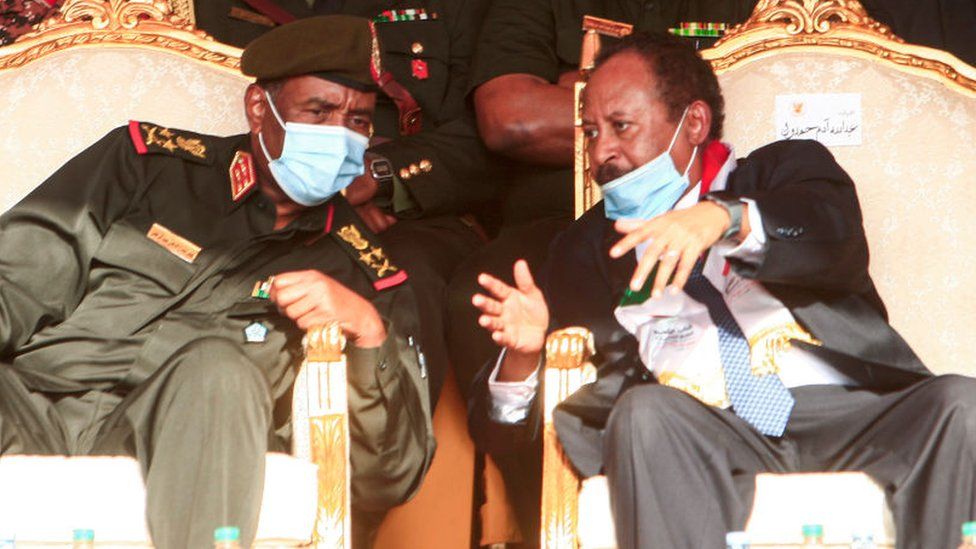
The leader of the Sudanese coup, General Abdel Fattah al-Burhan, took a leap in the dark.
It endangered Sudan’s international position as a nascent democracy, endangered essential debt relief and international aid, and jeopardized peace with rebels in Darfur and the Nuba Mountains.
He was the head of the Sovereign Council of Sudan and the face of the army in the country’s civil-military coexistence – until Monday, when he took full power.
He dissolved the country’s civilian government, arresting Prime Minister Abdalla Hamdok and other prominent civilians with whom the military had agreed to share power until next year’s elections.
The general’s autocratic ambitions were no secret.
In recent months, he has shown impatience with Hamdok’s leadership, signaling that a strong ruler was needed to save the nation.
In a recent military-backed demonstration in the capital, Khartoum, protesters accused Hamdok of deteriorating living conditions, not helped by a blockade at the main eastern port that led to shortages.
Sudanese democrats were wary of military ploys, which appeared to be copied from the script that led to Abdul Fatah al-Sisi’s military takeover of Egypt in 2013.
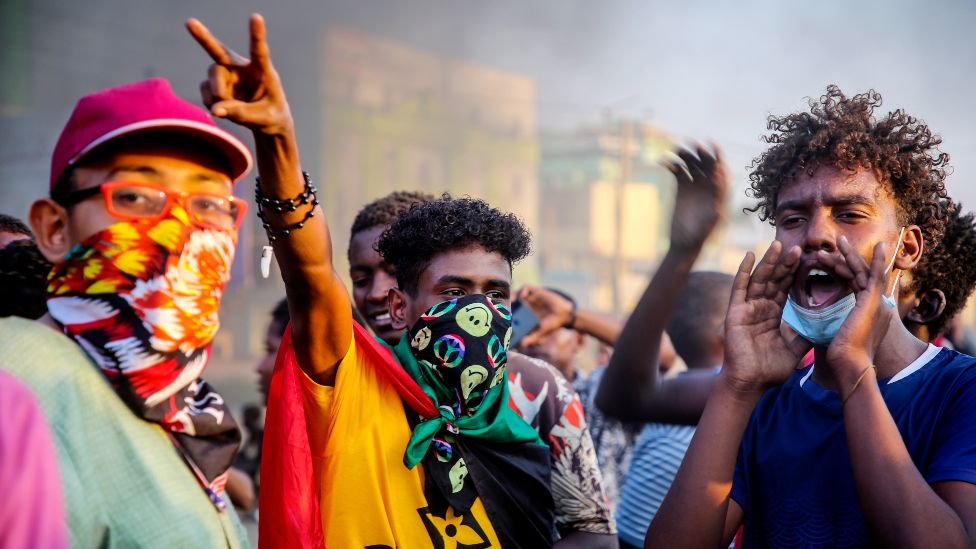
Sudan’s Association of Professionals and the multitude of neighborhood committees that orchestrated the non-violent protests that brought down President Omar al-Bashir’s 30-year government in 2019 prepared for a new round of street demonstrations.

Foreign diplomats were also concerned. US Special Envoy Jeffrey Feldman visited Khartoum over the weekend to urge a deal between generals and civilians. He left town on Sunday with – he thought – an agreed deal.
The coup was staged hours later, leaving Americans not only dismayed but also indignant.
Making it clear that they had been duped, the US administration “put on hold” a $ 700 million (£ 508 million) financial assistance package.
An even bigger problem is the state of Sudan’s debt relief package recently negotiated by Hamdok.
After two years of painful delays, international aid to save Sudan’s economy was finally in sight – and is now in danger.
The African Union (AU), the United Nations, the East African regional body Igad and all Western Sudan donors have condemned the coup and called for a return to civilian rule.
The Arab League has also asked for the constitutional formula to be respected. The grouping is usually in step with the Egyptian government, raising the question of how much Gen Burhan can count on Cairo’s support.
Saudi Arabia and the United Arab Emirates (UAE), which provided crucial financial aid to Gen Burhan in 2019, have remained silent so far.
Their sympathies probably go to the strongman in the army, but they will also know that they cannot cover the costs of bailing out Sudan.
General Burhan was already the most powerful man in the country, his role legitimized by the August 2019 power-sharing agreement between the military and the Forces for Freedom and Change (FFC), a loose coalition of civilian groups .
So why should he risk everything for a blatant takeover?
commercial empires
Under the agreement, Gen Burhan was due to resign from his position as president of the Sovereign Council next month.
At that point, a civilian chosen by the FFC would become the head of state and the civilians in government would be in a better position to move forward with the implementation of the key points of their agenda.


One is accountability for human rights violations. The government is committed in principle to hand over former President Bashir to the International Criminal Court (ICC).
His former lieutenants – including General Burhan and leader of the paramilitary rapid support forces, General Mohamed Hamdan “Hemeti” Dagolo – wanted him to be tried in Sudan and not in The Hague.
They have good reason to fear that Bashir will name them as guilty of the alleged atrocities committed during the Darfur war.
General Burhan and his fellow officers have even more reason to fear that the investigation into the Khartoum massacre in June 2019 would also point the finger at them.
It happened two months after the army’s removal of Bashir, when peaceful protesters called for civilian rule.
The fight against corruption and the implementation of the security sector reform were other items on the agenda that worried the generals.
Take the cumbersome “Commission for the dismantling of the regime of 30 June 1989, the removal of authorization and the corruption and recovery of public funds”.
It was not just about exposing and eradicating the network of companies owned by Islamists ousted from power in 2019, but also the tentacles of commercial empires owned by high-level generals.
Mr. Hamdok had become increasingly outspoken in his criticisms of the military intertwining in the economy.
Not only did the military command a large – and still growing – share of the national budget, but military-owned companies operate with tax exemptions and often allegedly corrupt contractual procedures.
Putting the military under adequate civilian control was also a priority for the next phase of the transition period.
Risk of rebellious actions
General Burhan says he keeps the transition to democracy on track and has promised a technocratic civilian government and elections within two years.
Most Sudanese see this as an unconvincing facade.
The repression dissolved the main trade unions and professional groups that had organized the previous street protests. The internet and social media are largely closed. Troops fired on protesters, killing 10 people.
This video cannot be played
To play this video you need to enable JavaScript in your browser.
Street activists have already overcome such crackdowns and forced the military to back down, particularly in the aftermath of the June 2019 killings.
Generals also have to face the reality that the civil war in some parts of the country is not over.
A peace deal last year brought several armed opposition groups to the government, but no deal has yet been reached with the two major rebel forces.
In Darfur there is the Sudan Liberation Movement led by Abdel Wahid al-Nur, and in the Nuba Mountains of South Kordofan there is the Sudanese People’s Liberation Movement North, led by Abdel Aziz al-Hilu.
Both have popular support and have shown military resistance. Both were in peace talks with the government and trusted Hamdok. The coup threatens a new conflict.
With his unconstitutional seizure of power, General Burhan has made a big bet.
It does not offer answers to Sudan’s most pressing issues – the economy, democratization and peace – and risks unrest and bloodshed at home and pariah status abroad.
In July 2019, following the army’s violent crackdown on the democratic movement, the “quartet” of the United States, the United Kingdom, Saudi Arabia and the United Arab Emirates, working closely with the AU, intervened to press for a solution. negotiated – which followed the following month.
A similar process may be needed to bring Sudan back from the brink. The problem is, after Monday, who can trust Gen Burhan to keep his word?


Alex de Waal is the executive director of the World Peace Foundation at the Fletcher School of Law and Diplomacy at Tufts University in the United States.
More information on the coup in Sudan:
- IN THE PICTURES: The coup protesters in Sudan take to the streets
- EXPLANATION: Coup d’etat in Sudan: what you need to know
- ANALYSES: Raising the alarm for democracy in Sudan
Related topics
- Sudan crisis
- Abdel Fattah al-Burhan
- Sudan
-
A quick guide to Sudan
- Published
- September 9, 2019
Around the BBC
-
Podcast Africa Today
Read More about World News here.
This Article is Sourced from BBC News. You can check the original article here: Source


