


This week saw a series of incisive reports on climate change, scheduled for the days before the start of the COP26 Summit in Glasgow.
The conference, which begins on Sunday, is where world leaders are asked to promise more ambitious cuts in greenhouse gases to prevent a rise in temperature.
Here, we focus on four key numbers to remember from reports as we head into two weeks of great behind-the-scenes speeches and meetings.
a queen
This is a Queen Elizabeth, who announced on Tuesday that she would not attend COP26 in person after her doctors advised her to rest. Wasn’t his role just ceremonial, you might ask? Yes, but the 95-year-old is also a seasoned diplomat and her absence is a blow to the UK’s ambitions to bring some of her luster to the global stage.
But it also comes to something bigger: the COP26 guest list could affect his chances of success. If the heavyweights of diplomacy don’t show up, the deals risk being less powerful.
There will be leaders from 120 countries, but Russian President Vladimir Putin, Chinese Xi Jinping and Jair Bolsonaro from Brazil will not come, pending last-minute second thoughts. These three countries are among the biggest polluters and the world needs them to commit to action.
And then there is the impact of Covid-19. Travel restrictions and concerns about access to Covid vaccines for representatives of some poorer nations mean that some delegates from islands threatened by rising sea levels cannot come.
They don’t have the power to make big decisions, but they are the cops’ soul. They bring the lived experience of climate change to the conference: the decisions made here are fundamental to their lives and their words carry this weight.
The year 2023
The year the world finally reaches its goal of donating $ 100 billion to the developing world to help absorb the impacts of climate change, three years behind the original 2020 target.
Some of that money goes into adaptation, from something as simple as shelters that people can run into during storms, to massive improvements to sea defenses or weather forecasting systems.


COP26 Climate Summit – The Basics
- Climate change is one of the most pressing problems in the world. Governments must promise more ambitious gas cuts for warming if we are to prevent greater global temperature rises.
- The Glasgow Summit is where change could happen. You have to watch out for the promises made by the world’s biggest polluters, such as the United States and China, and whether the poorest countries are getting the support they need.
- All our lives will change. The decisions made here could impact our work, how we heat our homes, what we eat and how we travel.
Read more about the COP26 Summit here.
The delay is a major blow to confidence and could make it more difficult to make meaningful progress at the top. For years the richest countries have promised to hand over the money and have continued to fail. Will developing countries believe that other promises will be kept?
But delegations can also decide that the money is so close to delivery and that action is so urgent that they are willing to put their anger aside.
2.7C
The amount by which the global mean temperature will rise from pre-industrial times if no further emissions cuts are agreed, according to a UN report released Tuesday.
This is significantly above the commitments in the 2015 Paris Agreement to keep any increase at 1.5 ° C and “well below 2 ° C”.

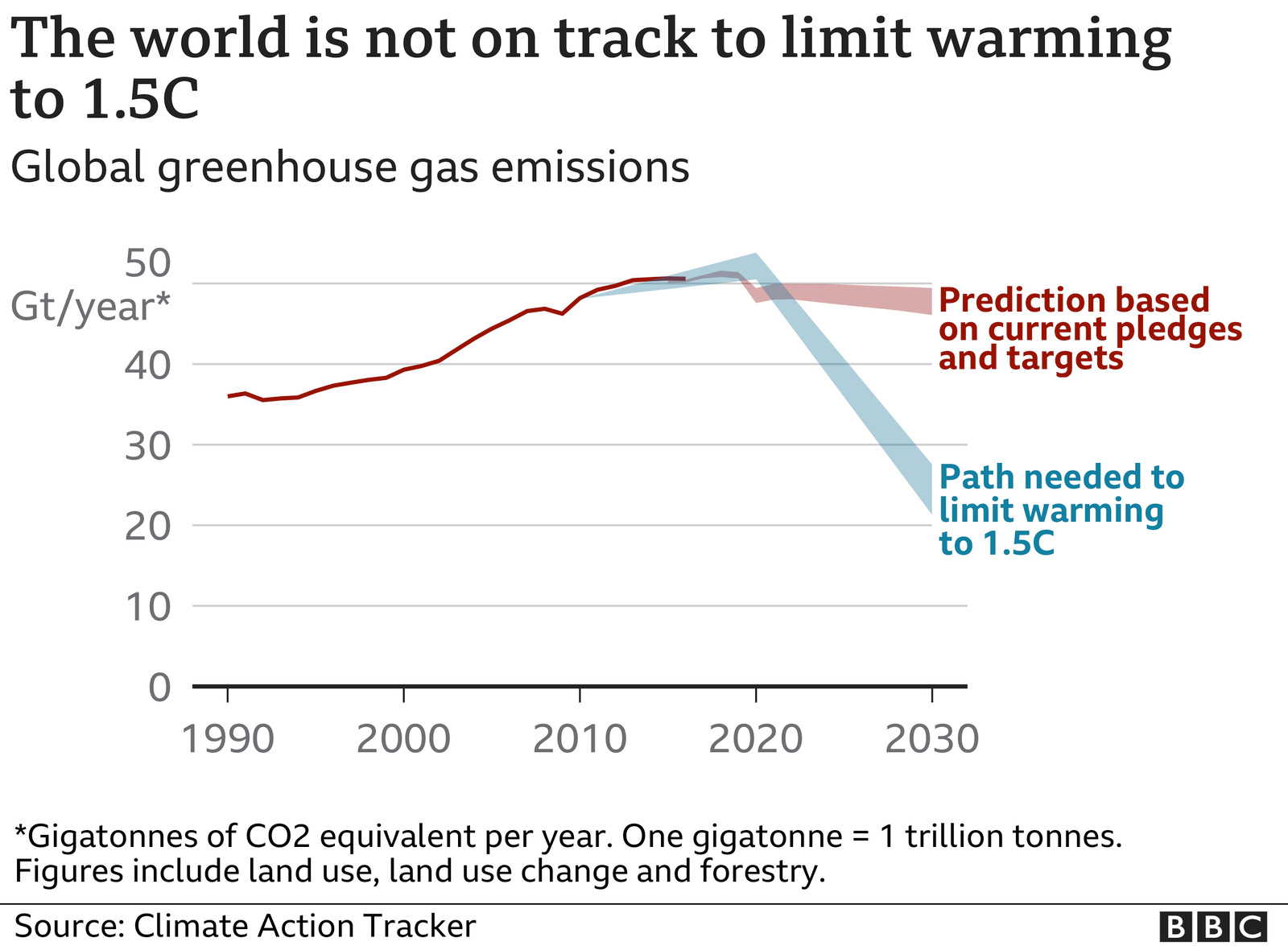
This figure is no surprise and does not mean that negotiators will give up hope of keeping 1.5 ° C alive, but it underscores the urgency behind the summit.
There is a lot to play for. We have seen some significant progress in promises to reach net zero by 2050, which is when we stop adding more greenhouse gases to the atmosphere than we can take away.
In all likelihood, the conference will see some progress in curbing emissions from various sectors, but they will be fast enough or deep enough to see cuts of 55% by 2030, which is what scientists say must happen to keep them alive. 5 ° C?
The finer details of the negotiated agreements will make all the difference. There will be questions about common times – the programs that countries agree to keep for their climate promises – and governments will be transparent about successes and failures.
413.2 parts per million
Here’s how much carbon dioxide is in our atmosphere, according to the latest data from the World Meteorological Organization.
This is a record high, and it’s a problem because CO2 is the most significant of the warming gases that push global temperatures up.
This is another wake-up call ahead of COP26. One of the reasons CO2 concentrations have risen, despite the pandemic, is because trees and oceans have stopped absorbing so much carbon after deforestation and rising sea temperatures.
Scientists are concerned about uncontrolled climate change as these so-called carbon sinks reduce their uptake of gas.
If nature is kind to us, it is more feasible to keep the global temperature down to 1.5 ° C. But if planetary changes cause trees, oceans and other areas such as wetlands to emit more greenhouse gases, our climate change problem becomes much more of an existential crisis than it is now.


The COP26 world climate summit in Glasgow in November is considered crucial if climate change is to be kept under control. Nearly 200 countries are being asked for their plans to reduce emissions and this could lead to major changes in our daily lives.
- Why the COP26 climate summit is important
- Simple guide to climate change
- What will climate change be like for you?
- Will the UK meet its climate targets?
Related topics
- COP26
- Paris climate agreement
- Climate change
- Glasgow
-
The survey shows a growing demand for climate action
- Published
- 1 day ago
-
What you can do to reduce emissions
- Published
- 3 days ago
-
The environmental disasters that we have almost solved
- Published
- 4 days ago
Read More about World News here.
This Article is Sourced from BBC News. You can check the original article here: Source


