


This is not the first, but the second budget delivered by Chancellor Rishi Sunak this year. It is certainly not the first time we have heard some of the content.
Although a series of announcements have been released in advance, the measures taken together will have a significant impact on your finances. This is the effect on the money you have in your pocket.
1. Increase in universal credit
If you work and also receive universal credit, you are probably interested in what is officially known as the reduction rate. This means that the universal credit payment you receive is reduced as you earn more.
For every pound earned (sometimes above a base level of earnings known as a work allowance), 63p is automatically deducted from your allowance payment.
By reducing it to 55 pence, the chancellor allows people to keep more of what they earn. By increasing the work allowance, the same is true.
Depending on the circumstances, around two million would be better off, but another two million applicants will see no benefit because they are not working or earning enough.
This is a significant policy in addressing the rising cost of living that will come “within weeks” and no later than December 1st. It comes after criticism of the cancellation of the £ 20 per week universal credit increase given during the pandemic that benefited 5.5 million people.


How were you influenced by the Budget? E-mail: haveyoursay@bbc.co.uk.
- Whatsapp: +44 7756 165803
- Tweet: @BBC_HaveYourSay
- Please read our terms and conditions and privacy policy


2. Address the rising cost of living
There is no shortage of evidence of a rise in prices in stores and on bills, with the cost of living expected to rise by 4% in the next year according to official forecasts.

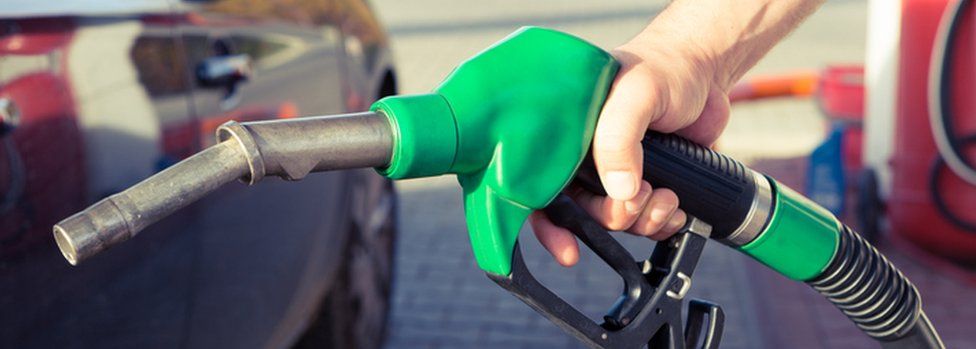
There has been a freeze on the fuel tax for more than a decade and this will continue for at least another year as drivers are hit by higher prices at the pumps.
About 60% of the price you pay for fuel consists of taxes, a mixture of fuel tax and VAT.
However, there were no measures to help families with rising gas and electricity bills.
3. Minimum wage and pay slips
Those with the minimum wage will receive a significant salary increase in April. For people aged 23 and over the rate – known as the National Living Wage – will increase by 6.6%, as the hourly rate increases from £ 8.91 to £ 9.50.
There will also be increases in the minimum wage for younger workers.
If they also receive universal credit, they may be affected by the previously mentioned contraction rate.


Minimum wage increases from 1 April:
- National living wage for people aged 23 and over: £ 8.91 to £ 9.50 per hour
- National minimum wage for people aged 21-22: £ 8.36 to £ 9.18
- National minimum wage for young people aged 18-20: £ 6.56 to £ 6.83
- National minimum wage for under 18s: £ 4.62 to £ 4.81
- The apprentice rate: £ 4.30 to £ 4.81
What is the minimum wage?
Public sector staff will also receive a pay raise in April, when the wage freeze in place during the pandemic is lifted. How much, and whether it is more than the increase in the cost of living, will be decided later.

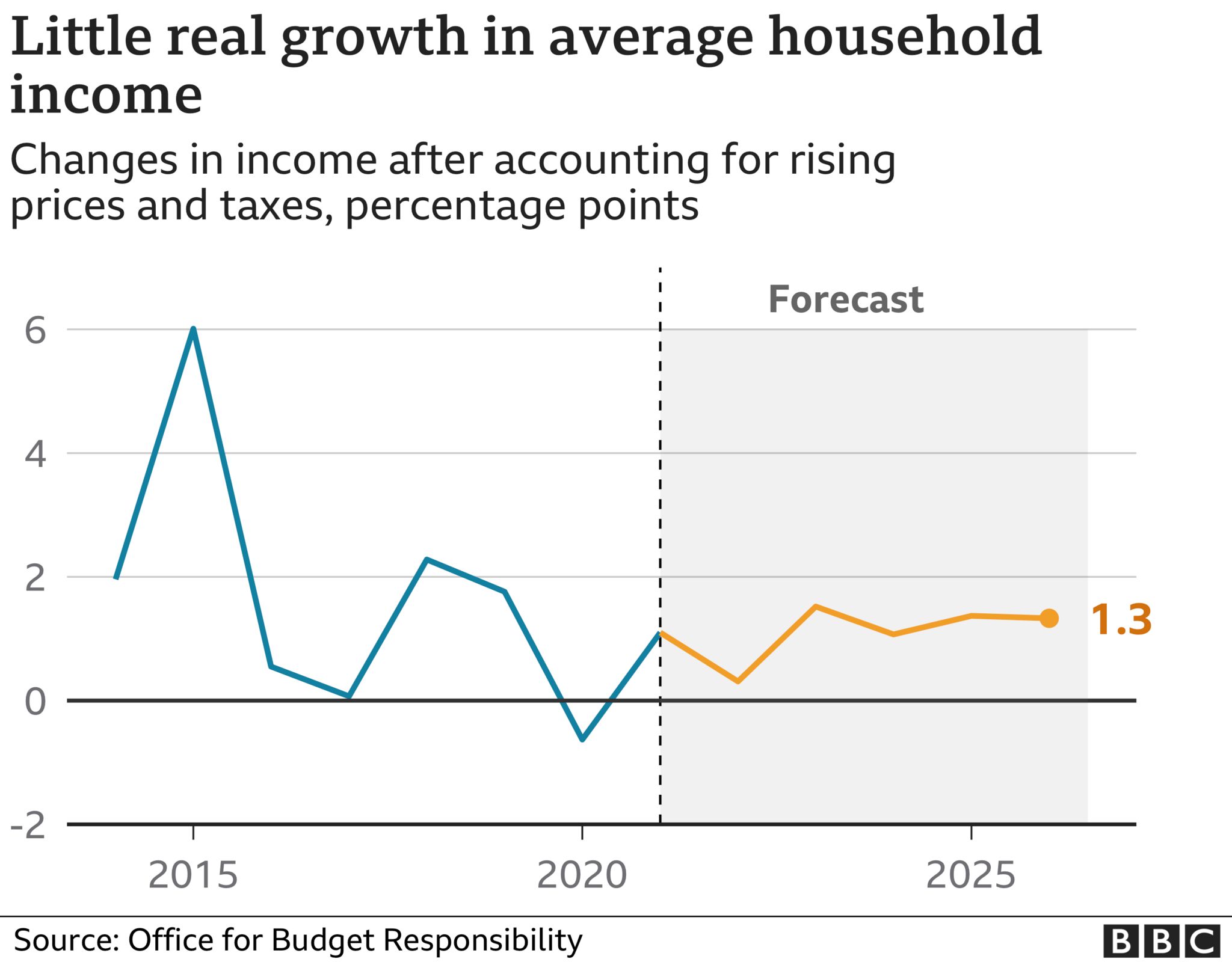
The government’s official and independent forecasters – the Office for Budget Responsibility – have said that real incomes for all will typically increase very slowly over the next few years. The increase in household income, after taking into account inflation and changes in taxes, will not exceed 1.5% per year for each year up to and including 2026.
In the year from April 2022, the take-home pay of an average worker will decrease by around 1%, or £ 180 per year, in real terms.
4. The cost of “sin” – revision of the alcohol tax
Drinking is becoming more expensive, with pub chains warning that higher wages and energy costs will mean much higher prices for a pint.

However, Sunak announced a revision it described as “the most radical simplification of alcohol tariffs in 140 years,” which took effect in February 2023.
This will lead to an increase in the price of more alcoholic beverages, but to a reduction in tariffs on drinks ranging from sparkling wine to draft beer.
There will be no immediate increase in alcohol taxes, contrary to what often happens on Budget Day.
The cost of smoking is rising again, with an increase in excise duty on cigarettes higher than inflation and an 11% increase in the excise duty on rolling tobacco, which will take effect in a few hours.
5. Your tax bill
Mr. Sunak said he planned to cut taxes during the rest of this Parliament.
- Live Updates: Rishi Sunak’s Budget Speech Reaction
- Budget measures at a glance
Although announced prior to this Budget, two massive tax decisions have already been made that will affect your money in the coming years.
In the latest budget, Sunak said income tax payment thresholds would be frozen at April 2021 levels for five years (although Scotland has different levels). This means that wage increases will push more people into higher tax brackets.
In September, the government also announced that employees, employers and the self-employed will all pay 1.25p more for National Insurance (NI) from April 2022 to fund social assistance.

6. Get on a plane
The cost of a domestic air ticket could be reduced, but long-haul flights could become more expensive.
This is because the chancellor made changes to Air Passenger Duty, a tax paid by airlines but ultimately funded by passengers through the cost of their tickets.
7. The coatings crisis
Many high-rise homeowners faced crippling costs due to the cladding crisis following the Grenfell Tower tragedy.
Chancellor confirmed a levy on major high-rise property developers to pay for the removal of dangerous coatings.
8. Lessons on money
To help the little ones, there are extra funds for projects to support new parents.
There is also a new program across the UK to improve math skills. The chancellor said people with low calculation skills face up to £ 1,600 per year in lost earnings, according to the charity National Numeracy.
Related topics
- HM Treasury
- Money
- Tax
- Personal finance
- Personal debt
- UK taxes
- Rishi Sunak
- Budget 2021
- Pay
-
A simple guide to the 2021 Budget
- Published
- 1 day ago
-
The minimum wage for 23 year olds will rise to £ 9.50
- Published
- 2 days ago
Read More about Politics News here.
This Article is Sourced from BBC News. You can check the original article here: Source


