


“It may seem strange for some people to live on top of a cemetery, but we have gotten used to it,” says Ana María Nieto, who lives in the Chilean port city of Arica.
Arica, on the border with Peru, is built on the sand dunes of the Atacama Desert, the driest desert in the world.
But long before the coastal city was founded in the 16th century, this area was home to the Chinchorro people.
Their culture made headlines in July, when the United Nations cultural organization, UNESCO, added hundreds of their preserved mummies to its world heritage list.
The Chinchorro mummies were first documented in 1917 by the German archaeologist Max Uhle, who had found some of the preserved bodies on a beach. But it took decades of research to determine their age.
Radiocarbon dating eventually showed that the mummies were over 7,000 years old, more than two millennia older than the better known Egyptian mummies.


Chinchorro culture

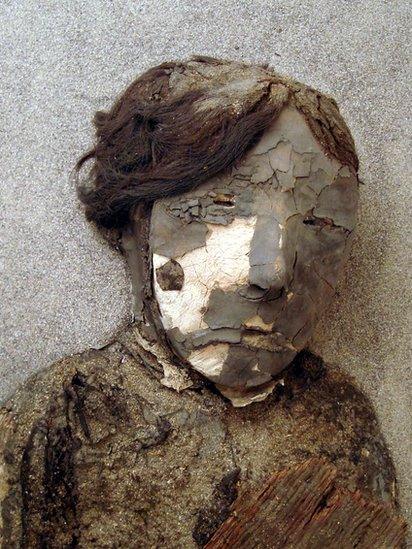


- Preceramic culture that lasted from 7,000 to 1,500 BC
- Sedentary fishermen and hunter-gatherers
- Lived in what is now northernmost Chile and southern Peru
- They mummified their dead in a sophisticated and evocative way
- Mummification is believed to have started as a way to keep memories of the dead alive
This makes the Chinchorro mummies the oldest known archaeological record of artificially mummified bodies.
Anthropologist Bernardo Arriaza, a Chinchorro expert, claims that they practiced intentional mummification. This means that they used mortuary practices to preserve the bodies rather than letting them naturally mummify in the dry climate, although some naturally mummified bodies have also been found at the sites.
Small incisions were made on the body, organs removed and cavities dried while the skin was ripped off, explains Arriaza.
The Chinchorro then filled the body with natural fibers and sticks to keep it straight before using the reeds to mend the skin.
They also attached thick black hair to the mummy’s head and covered the face with clay and a mask with openings for the eyes and mouth.

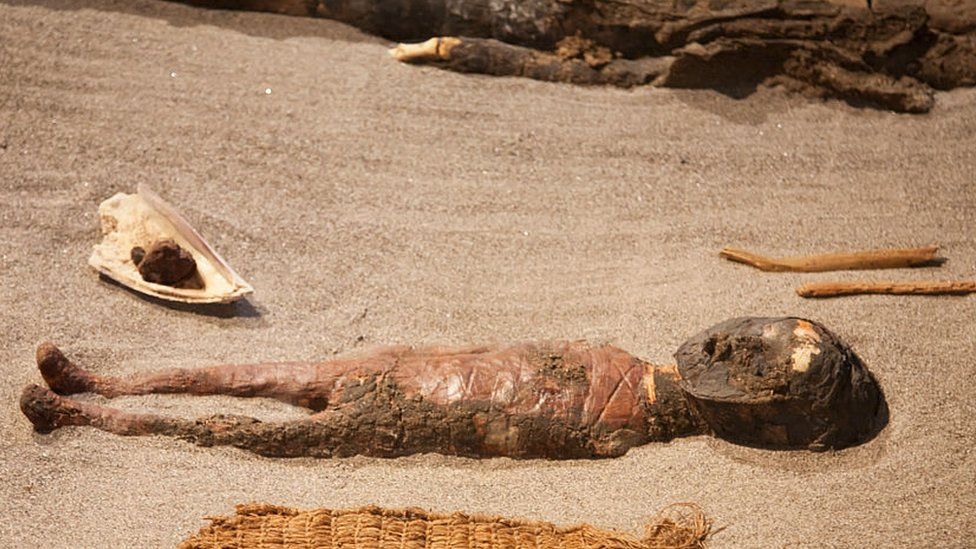
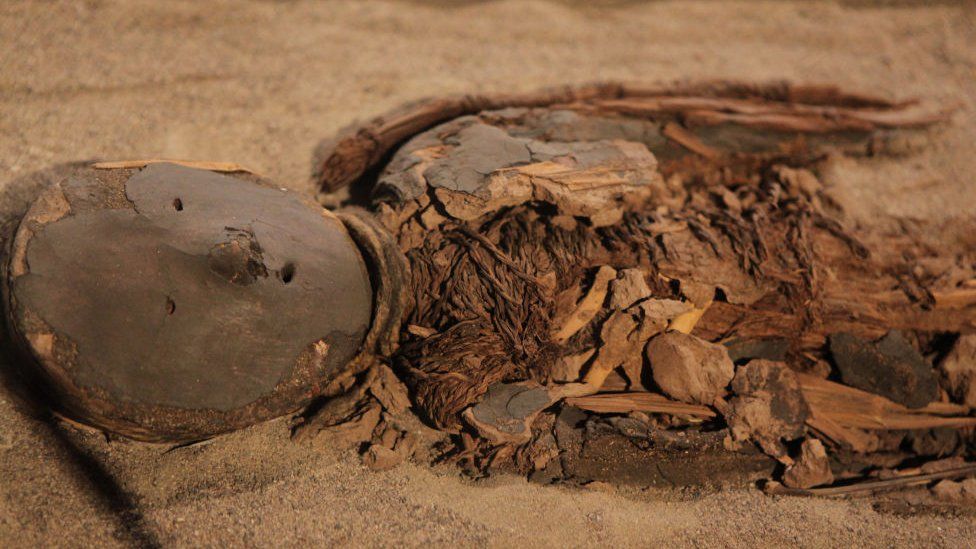
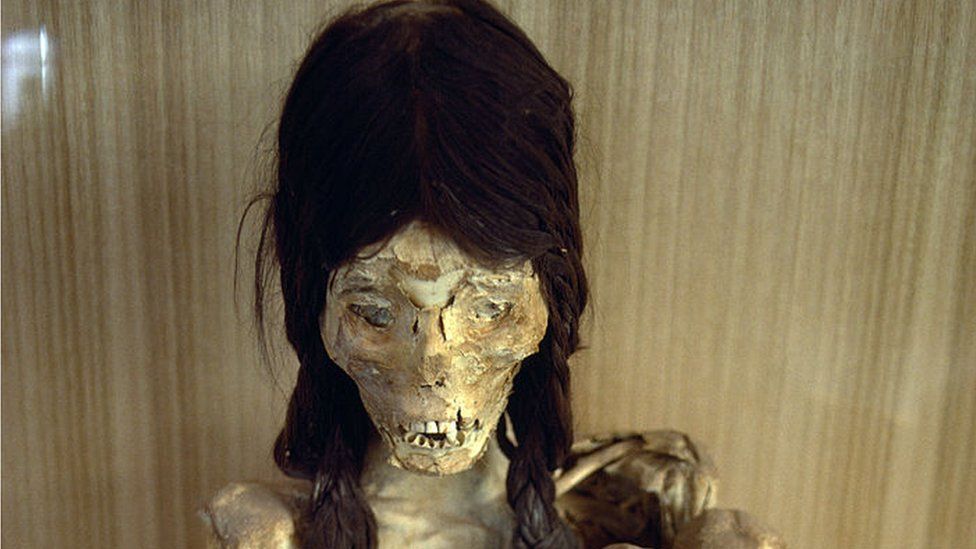
Finally, the body was painted in a distinctive red or black color using mineral pigments, ocher, manganese and iron oxide.
The Chinchorro’s methods and approach to mummification differed greatly from those of the Egyptians, Arriaza says.
Not only did the Egyptians use oil and bandages, but mummification was also reserved for deceased members of the elite, while the Chinchorro mummified men, women, children, babies and even fetuses regardless of their status.
Living with the dead
With hundreds of mummies found in Arica and other sites over the past century, locals have learned to live alongside – and often on top of – the remains.
Discovering human remains during construction work or having parts of a mummy sniffed and unearthed by your dog is something that generations of locals have experienced. But for a long time they did not realize how significant these remains were.
“Sometimes the residents tell us stories about how the children used the skulls for the balloons and took the clothes off the mummies, but now they know they tell us when they find something and let it go,” says archaeologist Janinna Campos Fuentes. .
Locals Ana María Nieto and Paola Pimentel are thrilled that UNESCO has recognized the importance of the Chinchorro culture.
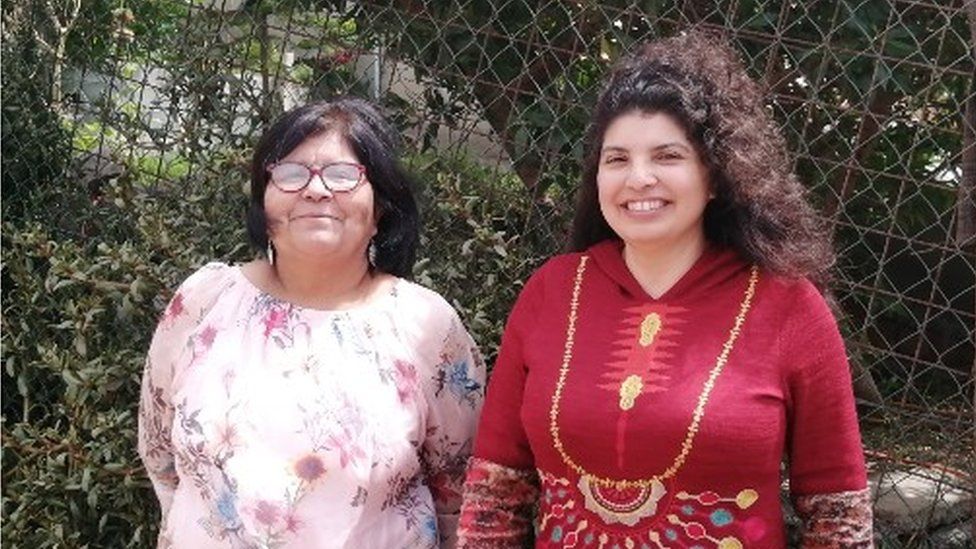
The women lead the neighbors’ associations near two of the excavation sites and worked closely with a group of scientists from the local University of Tarapacá to help the community understand the importance of Chinchorro culture and to ensure that the precious sites are taken care of.
There are plans for a neighborhood museum – where rows of Chinchorro’s remains lie under reinforced glass for visitors to peek at – to get a new interactive extension. The idea is to train local people as guides so that they can show their heritage to others.
Currently, only a small fraction of the more than 300 Chinchorro mummies are on display. Most of them are kept in the Archaeological Museum of San Miguel de Azarpa.
The museum, owned and operated by the University of Tarapacá, is a 30-minute drive from Arica and features impressive exhibits showing the mummification process.
A larger museum on the site is being planned to house more mummies, but funds are also needed to ensure they are properly stored so they don’t deteriorate.
Even Mr. Arriaza and the archaeologist Jannina Campos are convinced that Arica and the surrounding hills still have many treasures to be discovered. But more resources are needed to find them.
The mayor, Gerardo Espindola Rojas, hopes that the inclusion of the mummies on the World Heritage List will stimulate tourism and attract additional funds.
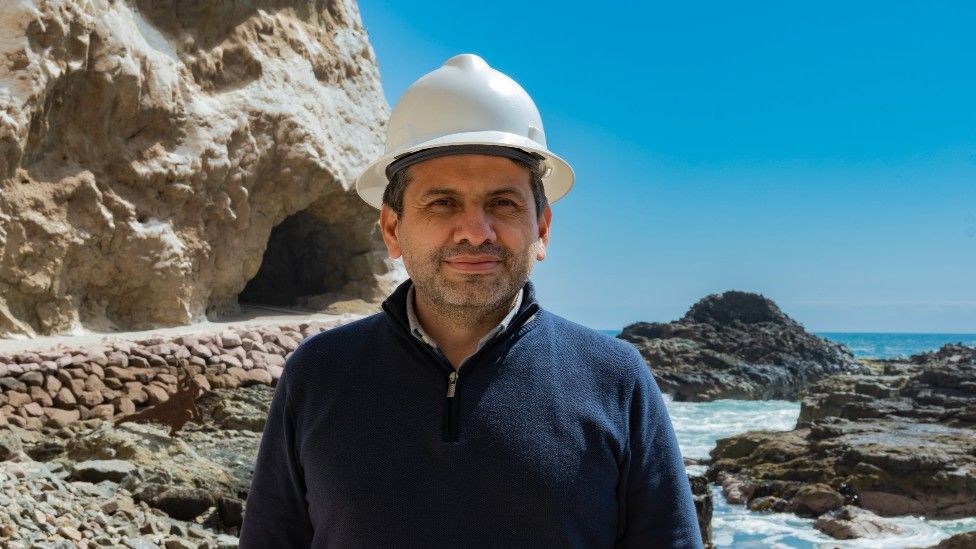
But he is aware that any development should be done the right way, working with the community and safeguarding the sites.
“Unlike Rome which sits on the monuments, the people of Arica live above the human remains and we have to protect the mummies.”
Town planning laws are in place, and archaeologists are present whenever construction work is carried out, he says, to make sure the precious remains are not disturbed.
Mayor Espindola is also adamant that unlike other parts of Chile where tour operators and multinational corporations have bought land to profit from tourist attractions, Arica’s assets should remain in the hands of its people and benefit the local community. .
The president of the neighborhood association Ana Maria Prieto is sure that the newfound fame of the mummies will work for everyone.
“This is a small town, but a friendly one. We want tourists and scientists from all over the world to get to know the incredible Chinchorro culture we have lived with all our lives.”
If you want to learn more about the Chinchorro mummies, listen to Jane Chamber’s Discovery report on the BBC World Service.
Related topics
- Archeology
- Chile
-
Ancient Egyptian rulers return in the mummy parade
- Published
- 3rd April
-
Mummies with golden tongues found in Egypt
- Published
- February 2
-
Egyptian mummified animals “digitally discarded”
- Published
- 20 August 2020
Read More about World News here.
This Article is Sourced from BBC News. You can check the original article here: Source


