


There are no simple solutions to complex problems such as climate change. But there have been times in the past when the world has come together to try to solve an environmental crisis.
How did we deal with acid rain, for example, or the ozone hole? And are there any lessons for tackling the bigger problem of global warming?
1970s, 80s and 90s: acid rain
It is the 1980s and fish is disappearing in the rivers of Scandinavia. The trees in parts of the forests are leafless, and in North America some lakes are so lifeless that their waters turn an eerie translucent blue.
The cause: Clouds of sulfur dioxide from coal-fired power plants travel long distances in the air and fall back to Earth in the form of acid rain.

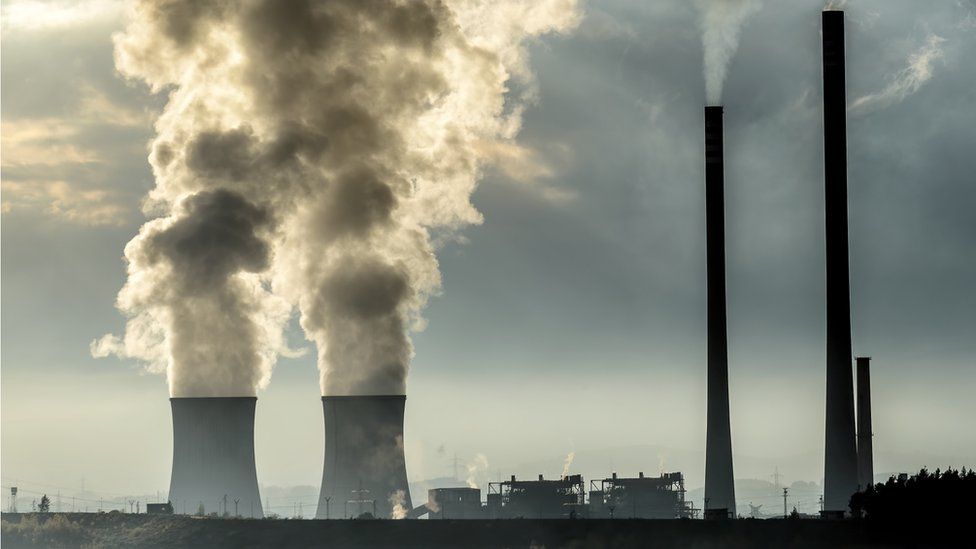
“In the 1980s, essentially the message was that this was the biggest environmental problem of all time,” says Peringe Grennfelt, a Swedish scientist who played a key role in highlighting the dangers of acid rain.
Headlines warning of threats of acid rain were the order of the day. For years there had been obfuscation, denial, and diplomatic stalemates, but once the science was undoubtedly settled, the calls for action quickly gained momentum. It has led to international agreements limiting pollutants from burning fossil fuels that acidify rain.
- BBC World Service – Witness to History, Acid Rain
Amendments to the Clean Air Act in the United States have seen the development of a cap and trade system, which gives companies an incentive to reduce sulfur and nitrogen emissions and trade any excess allowances. Each year, the cap was lowered until emissions dropped dramatically.

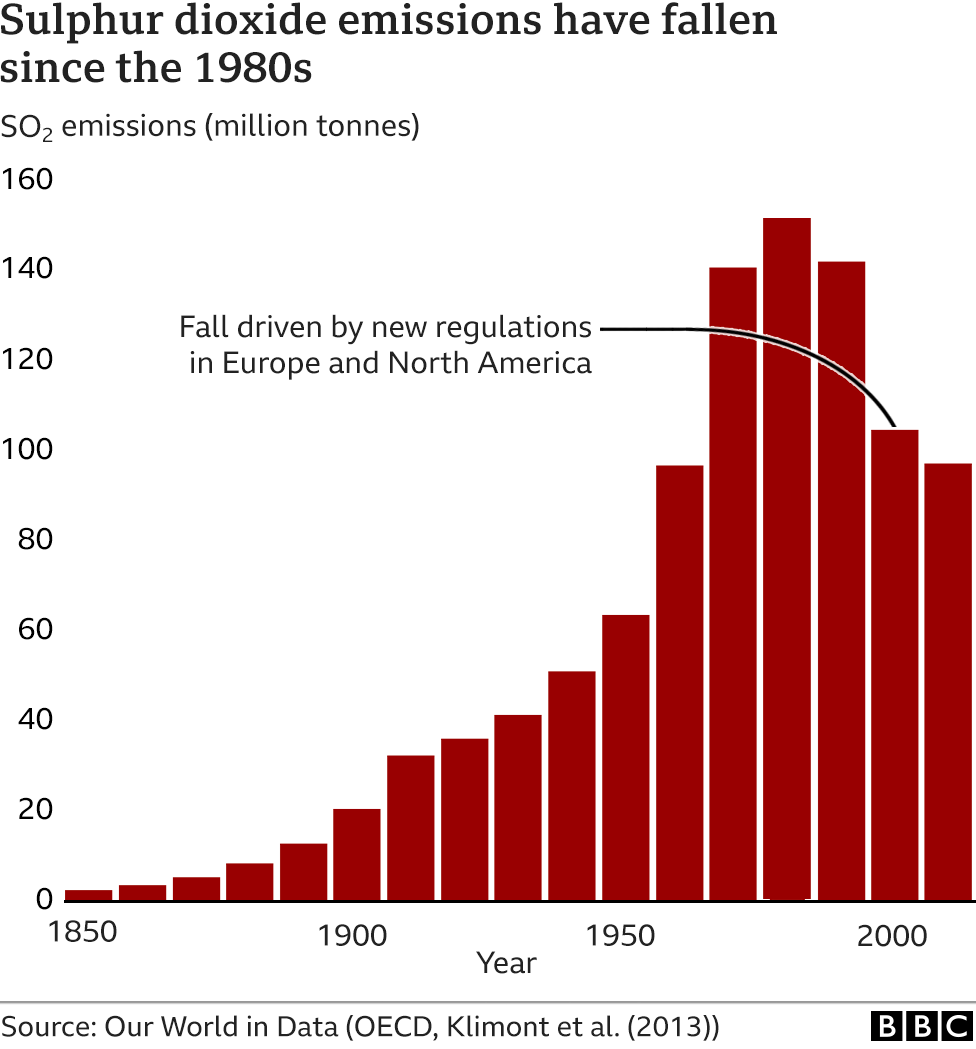


So did it work? Acid rain is now largely a thing of the past in Europe and North America, although it remains a problem elsewhere, particularly in Asia.
However, Canadian scientist John Smol, a young researcher in the 1980s, says acid rain has been in many ways a “success story”, showing that countries can unite and tackle an international problem. “If you don’t put a price on pollution, people will pollute. We’ve learned that for sure,” he says.
1980s: the ozone hole
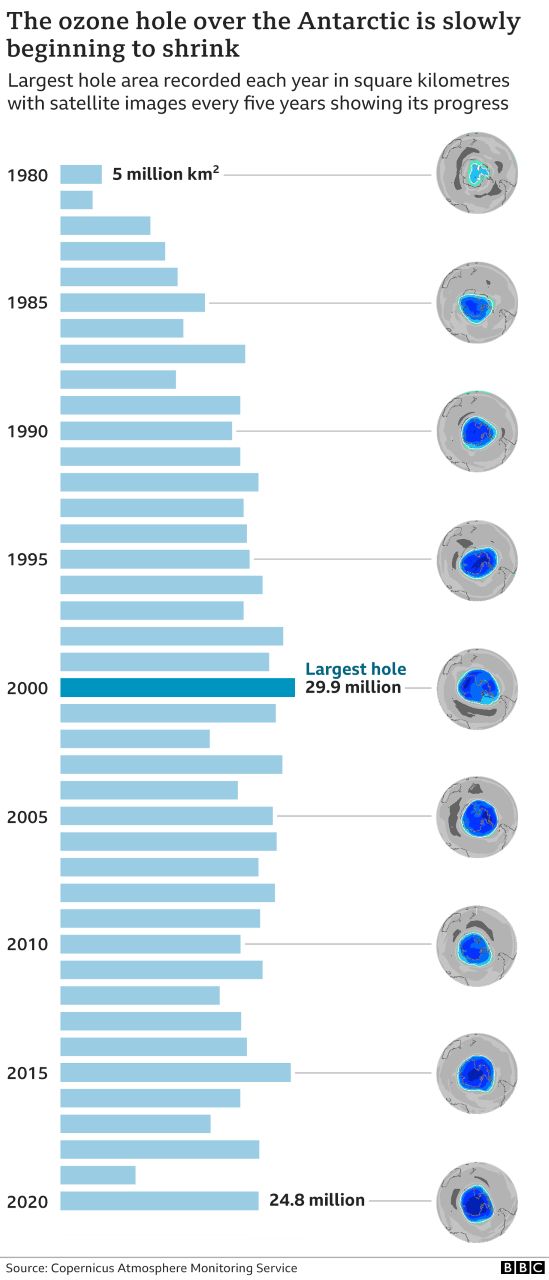
In 1985, news of another looming environmental problem made headlines. Scientists from the British Antarctic Survey (BAS) have alerted the world to a large expanding hole in the ozone layer above the Antarctic. It was caused by chlorofluorocarbons – greenhouse gases better known as CFCs – then used in aerosols and refrigerants.
“Suddenly it ‘boom’ and drops very rapidly,” says BAS polar scientist Anna Jones, referring to the dramatic thinning of the gas band that protects the planet from harmful UV rays.
- The CFC ban has reduced global warming, scientists say
- The ozone layer “saved” from CFC damage
- “Ozone hole vigilance still needed”
Ozone over the Antarctic has been decreasing since the 1970s, but news that the hole now covered the entire Antarctic continent has raised alarms around the world. In 1987, world leaders signed the historic Montreal Protocol, hailed as one of the most successful environmental treaties of all time.
Ozone-depleting chemicals were gradually phased out, with the industry switching to “CFC-free” aerosol cans attracting green consumers. “It was a global problem, but industry, scientists, policymakers came together,” says Dr. Jones.

“They acted quickly; they acted with a mechanism that allowed for the continued tightening of that protocol. It’s a very important model for how to make things work.”
Despite the success of the Montreal Protocol, there have been setbacks. Hydrofluorocarbons (HFCs), developed as alternatives to ozone-depleting chemicals, were found to be potent greenhouse gases.
And there has been a mysterious spike in CFCs tracked in China. Both led to further action. And while the ozone hole is “on the road to recovery,” ozone depleting chemicals remain in the atmosphere for a long time, which means repair is a long and slow process.
From the 1920s to the 1920s: leaded petrol
For decades, we have used leaded gasoline as fuel, as companies added leaded additives to help gasoline burn more efficiently. Leaded gasoline releases lead particles in vehicle exhausts that can be breathed in, causing a variety of health problems, including heart attacks, strokes, and mental development disorders in children.
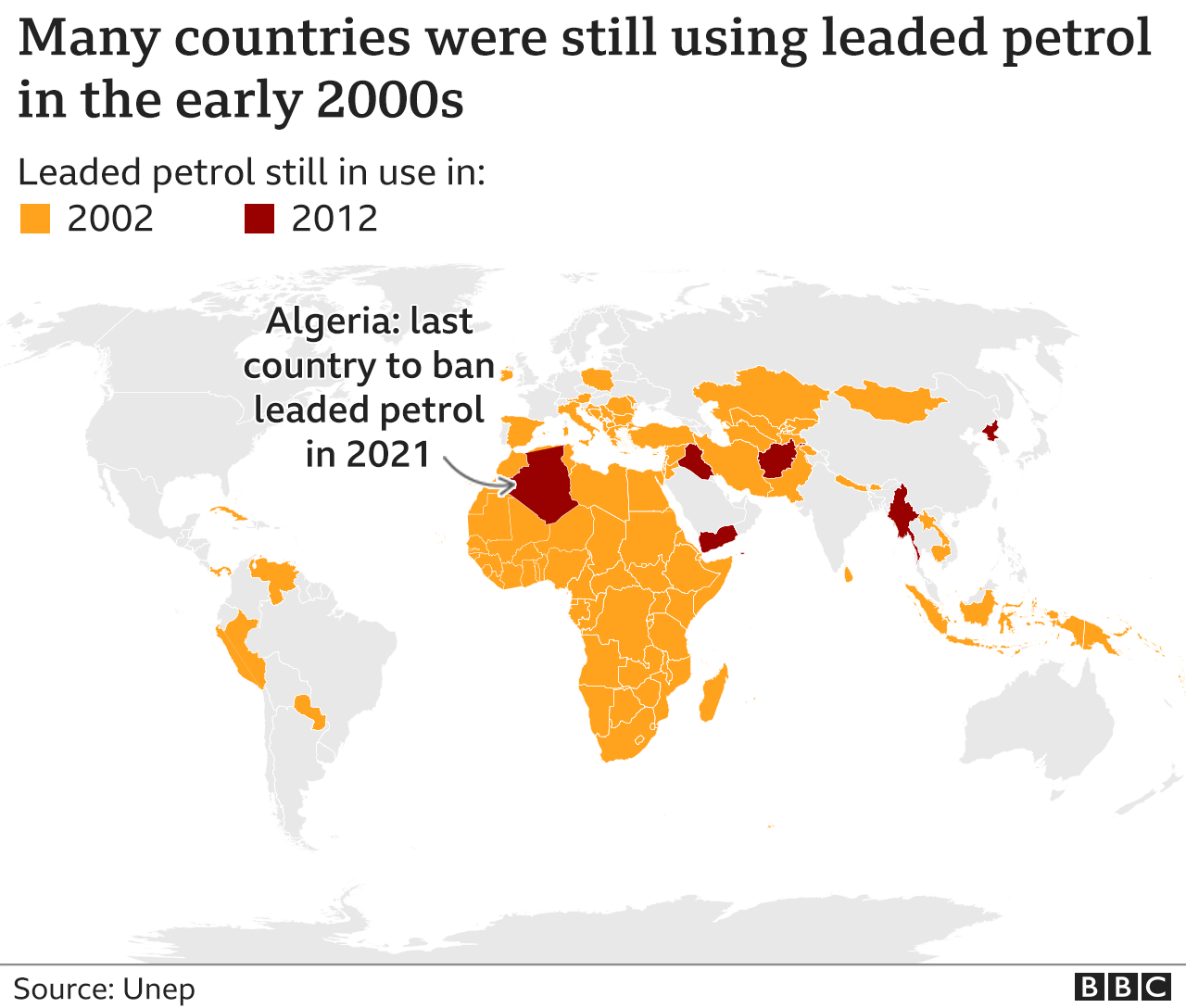
After a long battle between scientists, regulators and industry, a consensus on health risks has emerged and rich nations have banned leaded gasoline from the 1980s onwards.
- Leaded gasoline has now been phased out around the world, the UN says
- Why have we used leaded gasoline for so long?
However, use in developing countries has continued, as the fuel is cheaper to produce than unleaded gasoline. Following a long campaign by NGOs, industry groups and governments, under the auspices of the United Nations Environment Program (UNEP), the last drop of leaded petrol was pumped into the tank of a car only a few months ago.
And while the world has officially eradicated leaded fuel, lead pollution persists in the environment in the dust and soil, where it can persist for a long time.

Lessons for climate change?
With climate change dominating the news agenda, very little is heard of things like the ozone hole these days. However, there are parallels between these crises and the monumental one which is climate change.
For a long time, acid rain has been a source of international conflict, with some denying its very existence and the fossil fuel industry pitted against environmentalists. Sound familiar to you?
According to prof. Smol, debates and discussions on acid rain were training for the more complex issues of climate change. “The first lesson I learned was that we needed to effectively communicate the results of our studies, not only to other scientists, but also to policy makers and the general public,” he says.
“If there is an information gap, it will immediately be filled by interest groups.”
Prof Smol says that today the situation is even more complicated, with the growth of social media and the spread of disinformation.
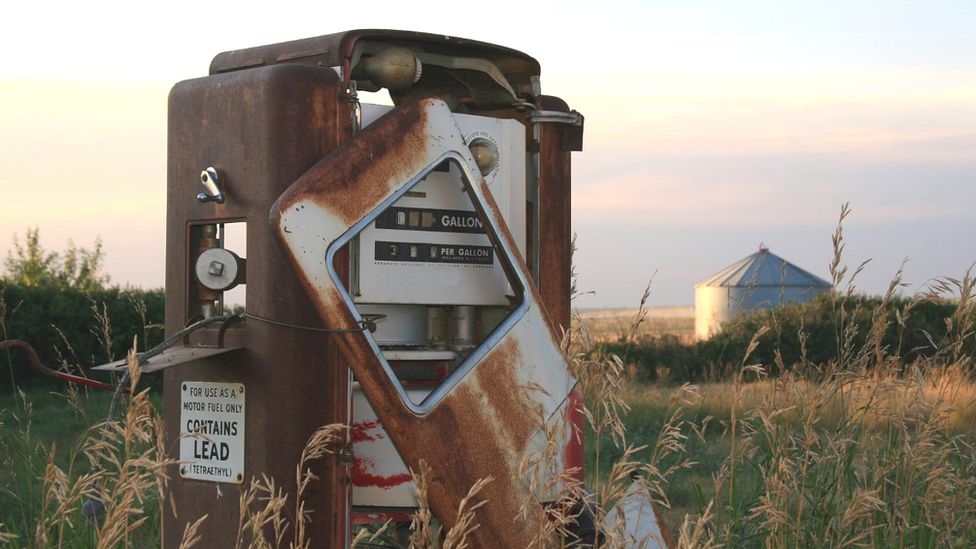
When it comes to the international push to eliminate leaded fuel, Rob de Jong, head of UNEP’s sustainable mobility unit, says a key lesson has been the value of a harmonized approach. “The entire guided oil campaign has invested heavily in public awareness, invested heavily in social and community action, invested heavily in focusing on the impact this has on children.”
And the steps taken by the international community to reduce ozone-depleting chemicals show – on a smaller scale – the kind of cooperation that will be needed to tackle global warming.
“The problem of climate change is much more complicated to solve than the ozone problem because we have no immediate alternatives to fossil fuels in the way we had alternatives to CFCs,” says Dr. Jones. “But this is not a reason not to do something: the problem is too important, it is too big and they have to move on.
“When industry and governments united in the past, they solved a threatening environmental problem globally, now they have to prove they can do it again.”
Follow Helen on Twitter.
Related topics
- Pollution
- ozone layer
- United Nations
- Climate change
- Environment
-
A really simple guide to climate change
- Published
- 13 October
-
What the COP26 climate summit could mean for all of us
- Published
- September 24
Read More about World News here.
This Article is Sourced from BBC News. You can check the original article here: Source


