


India sold more EVs in September than any previous month. Sales have been on the rise since April – the start of this financial year – and are already approaching the previous year’s total.
It’s a glimmer of hope for an industry that has struggled with a global shortage of semiconductor chips in the wake of a period of slow growth.
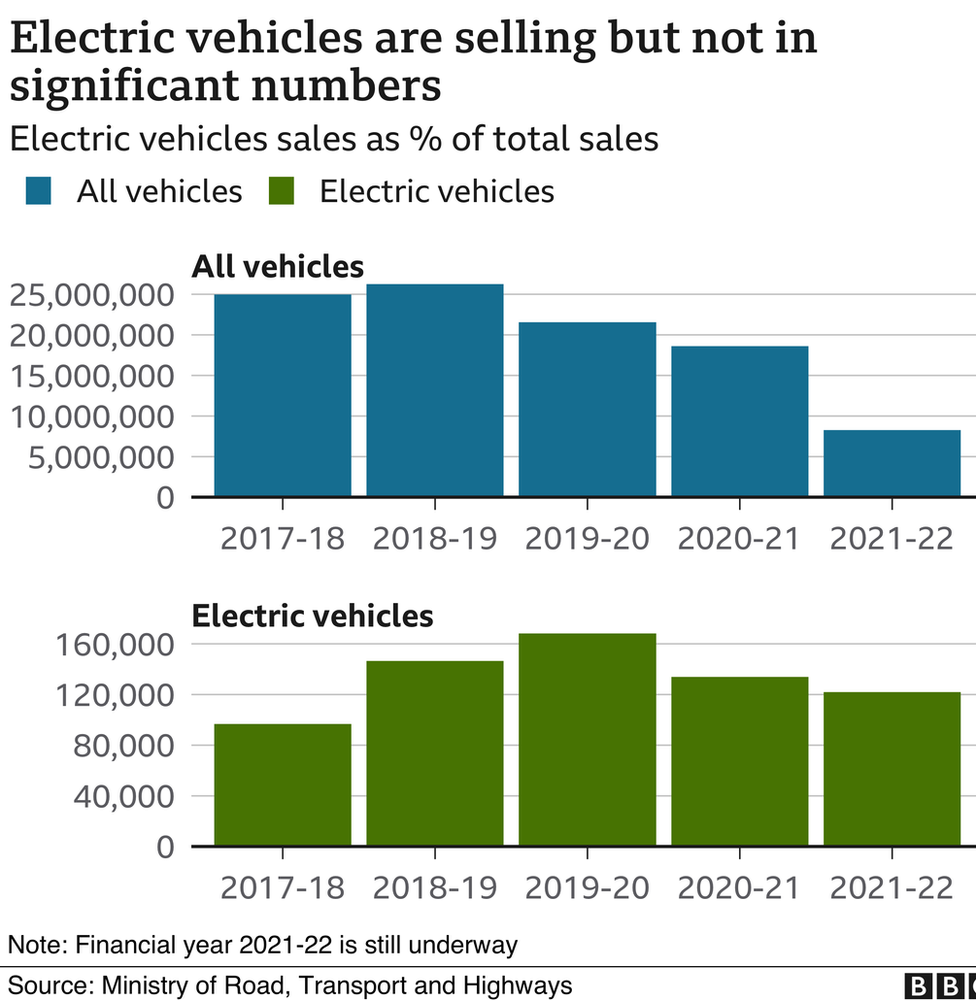
But it is only a glimpse. According to the think tank Council on Energy, Environment and Water (CEEW), sales of electric vehicles – 121,900 this financial year – represent only 1.66% of the 20 million cars sold in India.
Some electric vehicle companies, particularly two-wheeler manufacturers, are betting big, but demand is tepid for cars and commercial vehicles such as trucks. Prime Minister Narendra Modi’s government is trying to change that with a $ 3.5 billion (£ 2.5 billion) scheme to revive production.
Electric vehicles will also reduce emissions as pressure increases for India, the third largest carbon emitter in the world, to set more ambitious climate targets ahead of the COP26 summit in November. The electric alternative is also becoming increasingly attractive as global oil prices rise, bringing India’s fuel import bill to $ 24.7 billion.
- Why was Kerry unable to secure the emissions commitment from India?
- Because electric cars will take over sooner than you think
“It’s partly climate change and partly economy,” said Gaggan Sidhu, director of CEEW.
But is India ready for what is arguably the biggest upheaval in the auto industry since its inception more than a century ago?
The dream
“Consumers are saying, ‘I want this’, the government is pushing for it – the only thing left is for us to produce electric vehicles,” said Varun Dubey, chief operating officer of Ola Electric, a subsidiary of the race of the same name. calling app.
The company recently announced a sleek $ 320 million scooter factory in India that plans to produce 10 million electric two-wheeled vehicles annually, about 15% of world production.
“Nobody is debating whether we should move towards clean air. The question is how do we get there?” Dubey said.



The Indian government is certainly in a hurry to get there. In 2017, Indian Transport Minister Nitin Gadkari said he only wanted electric vehicles on Indian roads by the end of 2030, an impossible target he has since revised. Now the plan predicts that by 2030 30% of private cars, 70% of commercial vehicles, 40% of buses and 80% of two and three-wheeled vehicles will become electric.
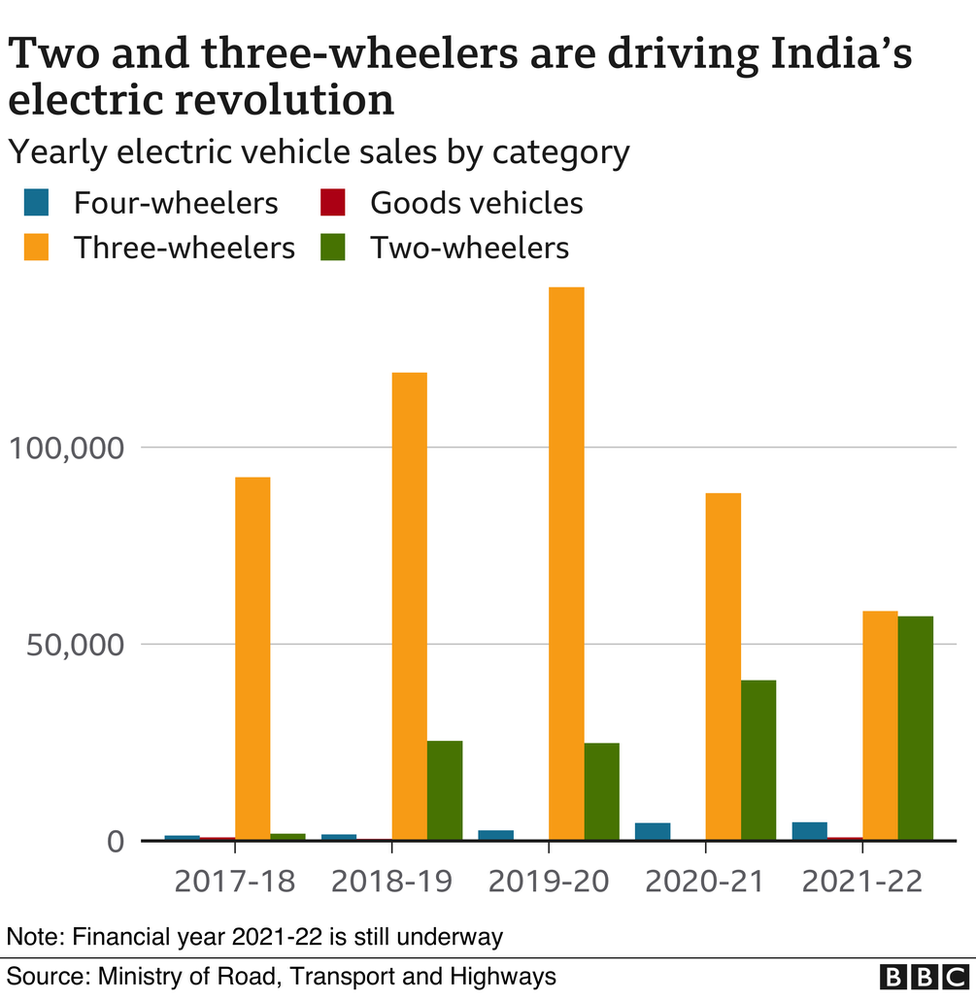
The good news is that two- and three-wheelers are well on their way to achieving this – electric alternatives already account for nearly half of sales in both categories this financial year, according to CEEW. And Hero Electric, India’s largest battery-powered scooter manufacturer, has called for a halt to sales of petrol-powered two-wheelers by 2027.
“The world moves on two wheels. We will not switch to electric vehicles unless we move the two wheels,” Dubey said.

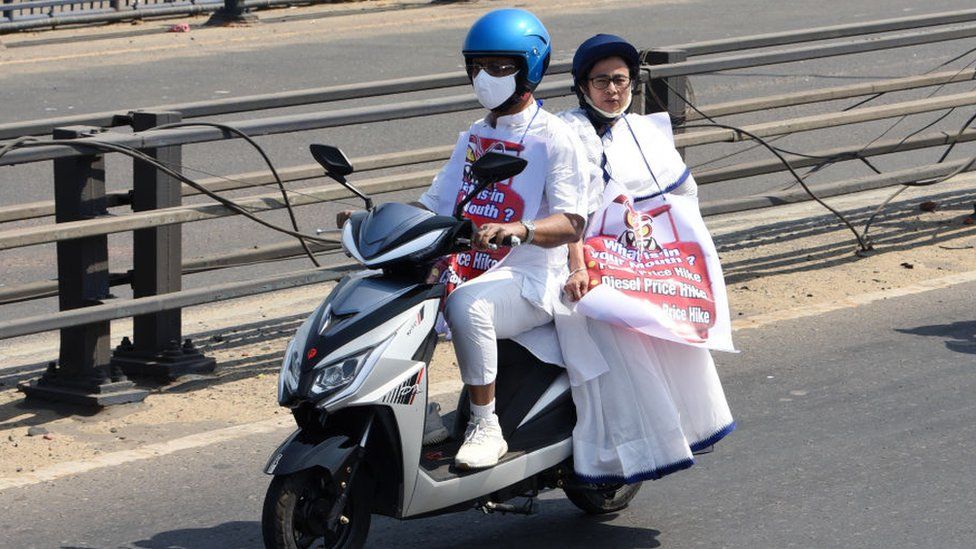
India sold about 17.4 million two-wheelers and just 2.7 million cars in 2019-20, according to the Society of Automobile Manufacturers. Two-wheelers far outnumber cars in much of South and Southeast Asia and Africa, a vast future market for the battery-powered motorcycles that Ola wants to capture.
The company said so sold about 100,000 scooters to Indians during a two-day online shopping window last month. That’s more electric two-wheelers than India has ever sold in a single financial year.
“Clearly there is pent-up demand,” Dubey said.
Reality
This appears to be less clear for electric cars, which account for less than 4% of India’s auto sales this financial year.
“You can only sell what’s there,” said Vinkesh Gulati, president of the Federation of Automobile Dealers Associations. Note that the problem has to do with supply rather than demand.
He said the challenges range from insufficient charging stations (India has less than 2,000 compared to around 900,000 in China) to battery disposal at resale value (India has a huge second-hand market for car).
And then there is the cost. The average price of a car in India is around 700,000 rupees – the cheapest electric car available starts at 1.2 million rupees.

All of this leads to few options, Gulati said, and even those disappear outside the big subways – Delhi, Mumbai, Bangalore – which make up only a fifth of the market. “Ultimately, companies need to create a market for electric vehicles.”
Car buyers in India are fussy, ambitious but cautious with their expenses. This is why Maruti, India’s largest carmaker, has made no move to launch an electric car, saying the prices are still too high. It is also the reason why foreign brands have struggled to break through the market and have even closed their doors. Ford announced last month that it would stop making cars in India, even though it has invested $ 11 billion in electric vehicles in the United States.
Yet Tesla is expected to enter the Indian market soon: he complained about high import tariffs and Gadkari said his government would provide “whatever support” was needed, but the company should produce locally and not sell Chinese-made cars to Indians. .
More foreign companies may arrive as India’s electric car market expands, said Puneet Gupta, chief automotive analyst at IHS Markit. But he does not see that this will happen before 2030. Gulati is also skeptical of any immediate increase in electric car sales unless the government introduces a “drastic policy”.
For one, he said, uniformity would help as different states in India offer different incentives – and some offer none.
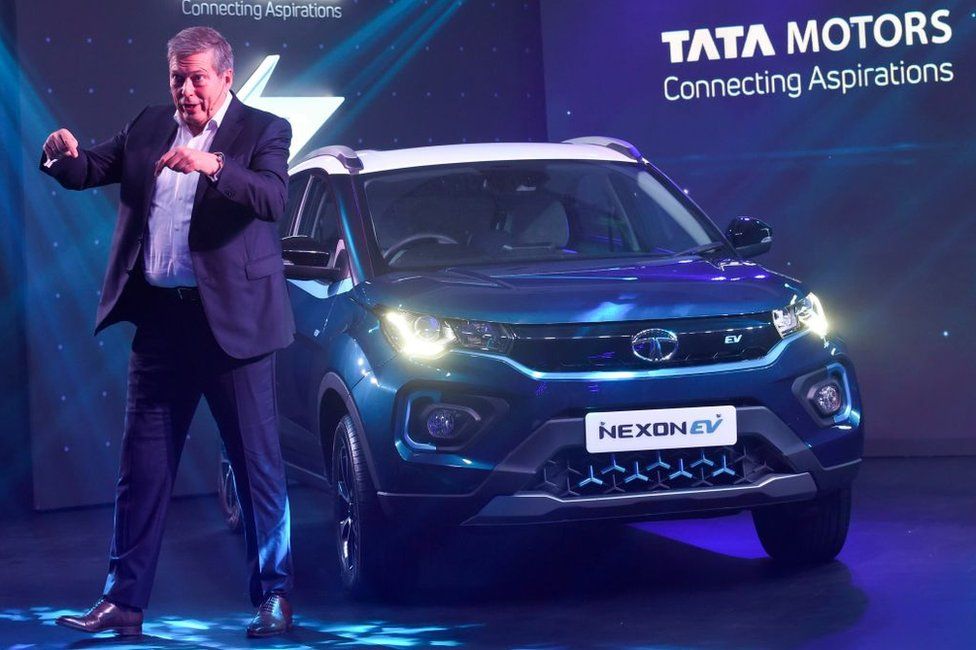
But sales are on the rise. “We were fighting for 300 [car] We now receive 3,000 reservations a day, ”said Shailesh Chandra, president of the passenger vehicle division of Tata Motors, India’s largest electric car manufacturer.
“How changing consumer mentality will play a role in driving the market.”
The company just announced a $ 2 billion investment in electric vehicles, after raising $ 1 billion from an Abu Dhabi holding company and TPG Rise, a San Francisco-based climate fund. He plans to start an electric vehicle business that would invest in new models (he wants to launch 10 by 2025), charging platforms and battery technology.
The future
“The world of electric vehicles is very different,” Gupta said. “The whole ecosystem must work together.”
The manufacturer builds the car, but a chemical company makes the batteries to run it and an energy supplier provides the energy to charge it.
And everyone has to talk to each other to ensure continuous innovation, he added. “India is a difficult market for profitability. Hence, collaboration is essential to save costs and minimize losses.”
Mr. Dubey expects even bigger changes in the future: “All the data we have suggests that people are more than willing to shop online,” he said.
“Connected vehicles means having more data on how they work and behave, improving transparency, insurance, loans, making them more efficient and convenient”.
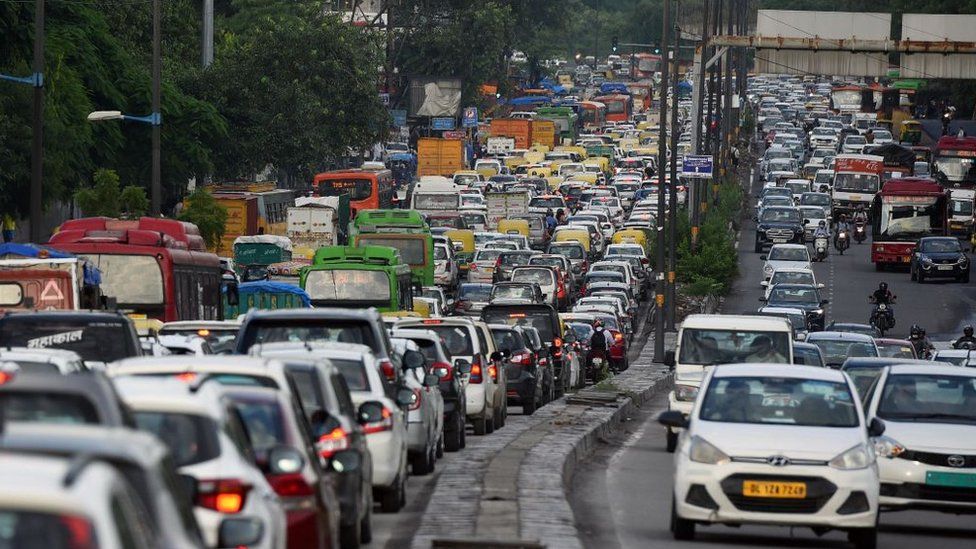
But as the so-called revolution grows, other challenges will arise: India still relies on imported batteries, mainly from China, and this is an obstacle to an energy-safe future. Mining of alternative batteries, such as aluminum, and disposal have environmental costs that could offset the gains made elsewhere.
“Recycling is a problem, but the circular economy will be a business opportunity,” said Sidhu of CEEW.
And the “mobility transition,” he said, is already well underway in India.
“The energy transition has crept into us – we have no idea what color the electron enters our house. But this [electric vehicles] is manifesting around us. Every tenth delivery boy is driving an electric scooter. ”
Graphs by Shadab Nazmi


Related topics
- Asia
- Climate change
- India
-
Classic cars converted to electric vehicles
- Published
- October 4th
Read More about World News here.
This Article is Sourced from BBC News. You can check the original article here: Source


