


Few customers who get into Paulina Ramírez’s taxi know her terrible story.
But 20 years ago, the so-called Paulina case made headlines around the world, her name being synonymous with Mexico’s strict rules and attitudes about abortion.
In 1999, at the age of 13, Paulina was raped and became pregnant by a man who broke into her family’s home. After the brutal attack, he sought abortion, fully legal in Mexico in case of rape. However, Paulina was harangued by conservative doctors, state officials and priests who placed constant obstacles to prevent her from terminating the pregnancy.
“I heard doctors say ‘I’m not doing this, they’re going to fire me. I’m not a killer,'” she recalls in her sweltering hometown of Mexicali, on the US-Mexican border.
The intimidation campaign was relentless. A doctor told Paulina that she could bleed to death or remain sterile due to an abortion. A priest told her she could be excommunicated.
“They brought pro-life representatives to my room who showed me pictures of dead fetuses and the image of Christ,” he says. “It was a very difficult time, I was still dealing with the trauma of the rape.”
Their cruel tactics worked. Eventually the 12-week deadline for an abortion passed and Paulina, still just a baby, had to carry the baby to term.
The suffering of that time has never completely abandoned her, but it is strongly encouraged by a unanimous ruling by the Mexican Supreme Court last month to decriminalize abortion. Specifically, the decision referred to the law in the northern state of Coahuila but created a precedent for the entire country.

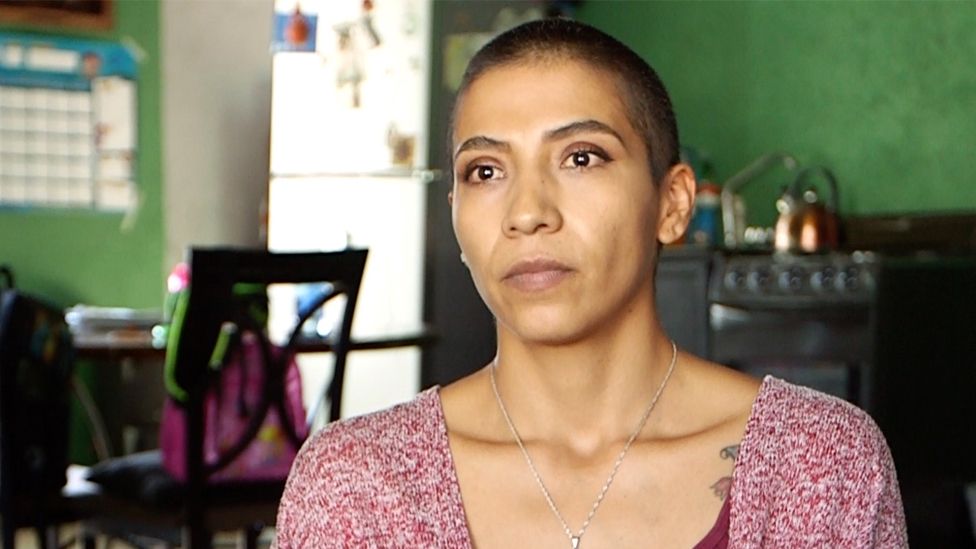
“I cried! I cried when I heard it!” smiles Teresa Mesa, a single mother of three in Coahuila. When she became pregnant for the fourth time, Teresa decided that the most responsible thing to do was to have an abortion, which was then illegal in her home state.
“It wasn’t easy. At that time, there was no legal protection for women, no place with adequate health standards to carry them out and really a lot of social stigma.”
Teresa hopes the measure will make it easier for other girls to abort than it has been for her, particularly when neighboring Texas in the United States moves in the opposite direction, towards much tighter control.
“This is just the beginning. There are still mountains to overcome before this is completely legal. We need proper abortion clinics and doctors who are prepared to do so.”
“And it’s not just about normalizing abortion”, she continues, “but also about making visible the domestic violence under which so many women live in Coahuila. Eight out of 10 women here suffer some form of violence at home.”
While the Supreme Court ruling has set a historic shift in motion, there are several legal challenges to be addressed before safe abortions are available across the country.
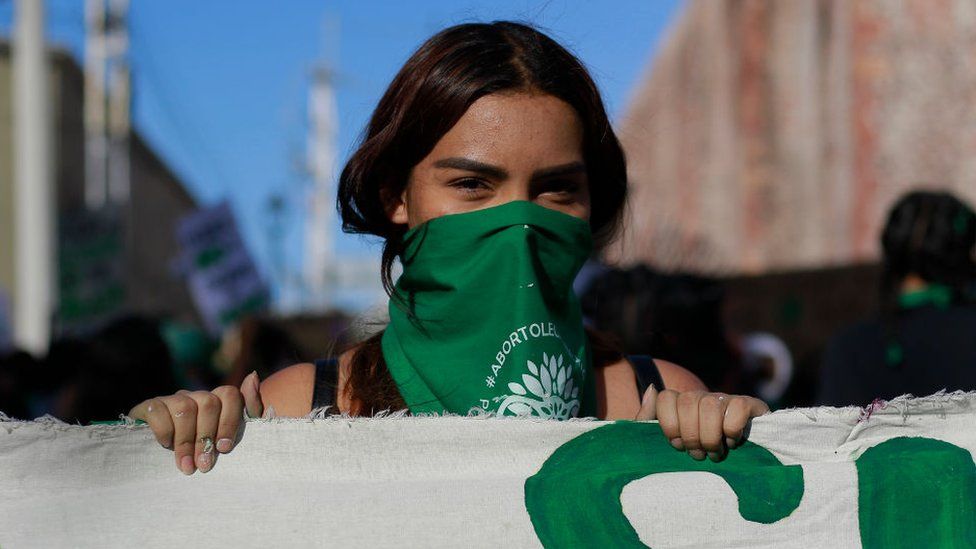
Meanwhile, many women – including Teresa – must instead turn to the Safe Abortion Network, an abortion rights group operating on the fringes of the law. I met members of the Coahuila branch as they posted posters with their contact details at bus stops around the state capital, Saltillo.
“Last year we helped nearly 300 women get abortion pills or travel to Mexico City,” where abortion is legal, group founder Malu Reina told me.
Although their opponents portray them as somehow “abortion promoters,” Ms Reina says this is a deliberate mis-characterization and that the cooperative provides sexual health education and support to vulnerable mothers in Coahuila’s marginalized communities.
- ANALYSIS: Can a country’s abortion law change a continent?
- ON THE EARTH: Rape survivors facing an ‘impossible choice’ in Brazil
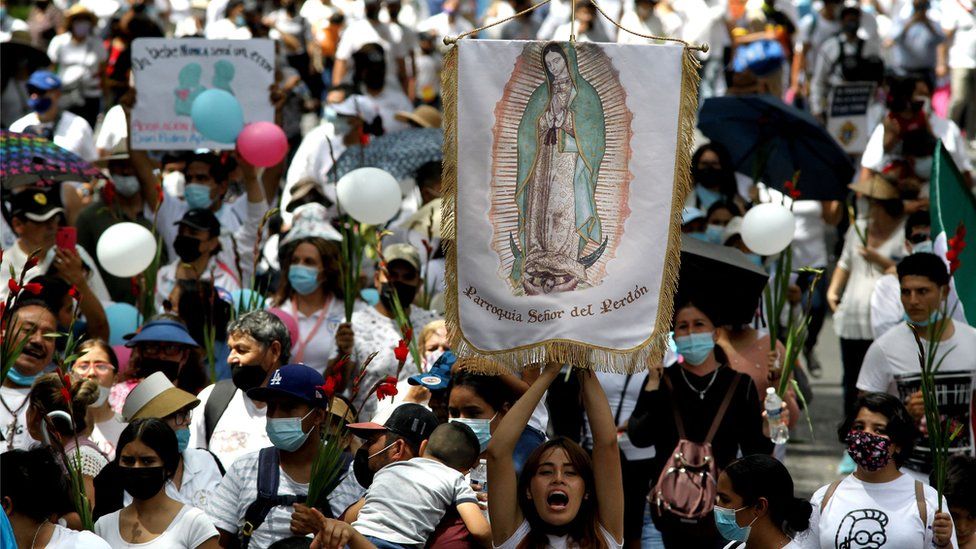
However, there are some powerful forces in Mexico lined up against the new law. Mexico is the second largest Catholic nation in Latin America and anti-abortion activists recently held several demonstrations in front of the Supreme Court. They say they are determined to block the court decision.
“The Supreme Court has failed against the fundamental freedom of life,” says Rodrigo Ivan Cortes, president of the National Front for the Family.
“Now they also want to proceed against the fundamental freedom of the health sector and take away the freedom of conscious objection for doctors and nurses. This is very, very dangerous for a democratic country”.
However, these activists seem to be losing ground. Across Latin America, attitudes towards abortion are changing. In Chile, Argentina, Mexico and beyond, the younger generation are slowly breaking down the traditional positions of their parents and grandparents.
Paulina Ramírez’s son is now 20 years old and they have a strong relationship. But she deeply resents his heartbreaking treatment as an adolescent rape victim, ashamed and victimized by those legally obliged to help her.
“Everyone decided for me except me. I just wanted to exercise my rights and they wouldn’t let me.”
Forced teenage pregnancies in circumstances of poverty will not go away overnight in Mexico. But decriminalization, says Paulina, is the first step in making sure no other girl experiences the same trauma she did.
Related topics
- Abortion
- Women
- Mexico
-
Mexico decriminalizes abortion with a historic sentence
- Published
- September 7
Read More about World News here.
This Article is Sourced from BBC News. You can check the original article here: Source


