


An ocean of conservative blue covers the electoral map in the southern state of Bavaria, Germany.
Yet the Conservative vote actually fell across Germany in last month’s federal vote, as the Greens achieved their biggest hit so far.
In an election dominated by climate change, a patch of green made a ripple in Bavaria. For the first time, a Green candidate was directly elected to represent Bavaria in the federal parliament.
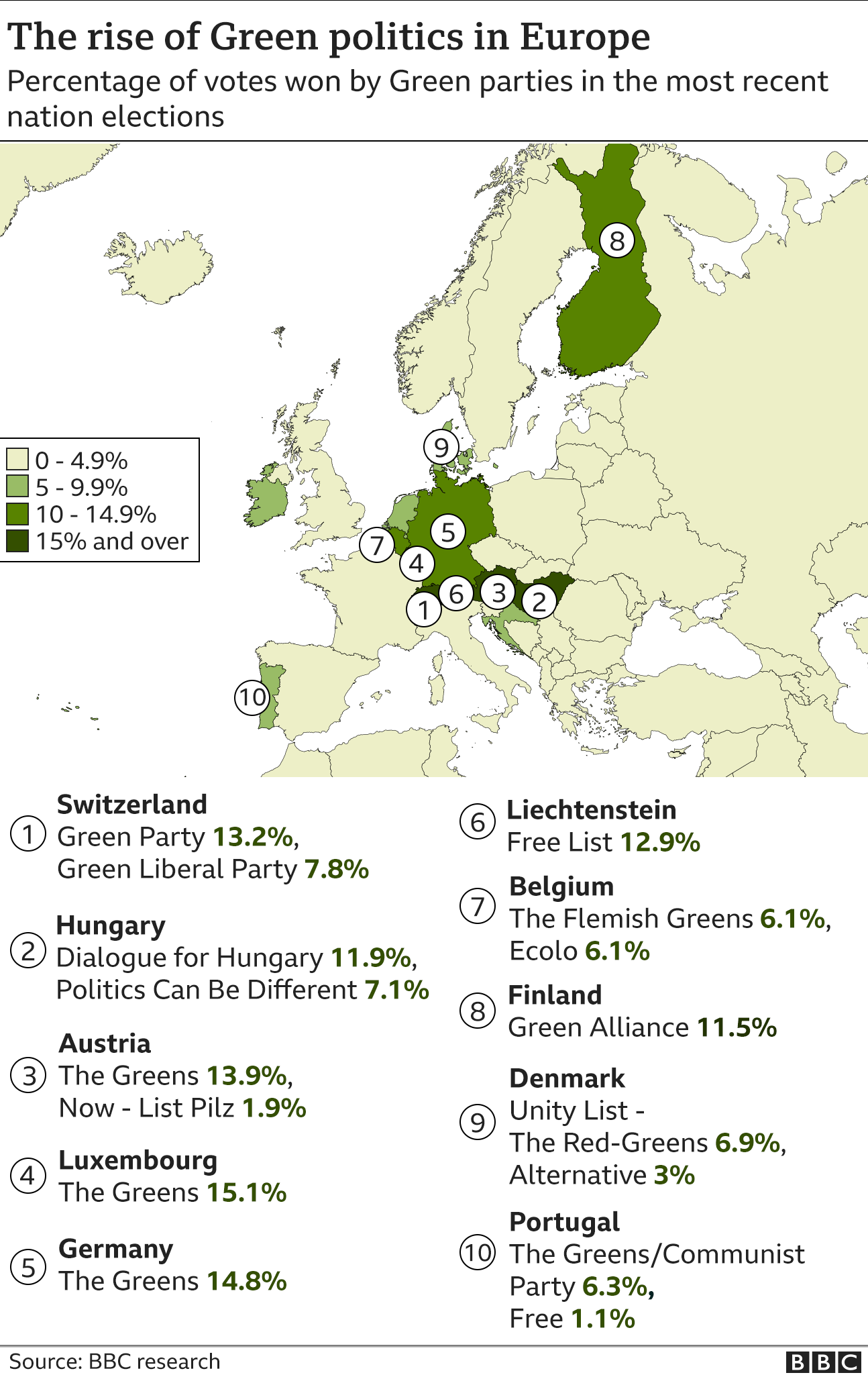
It is the symbol of the creeping increase in support for European green parties, from Hungary to Finland.

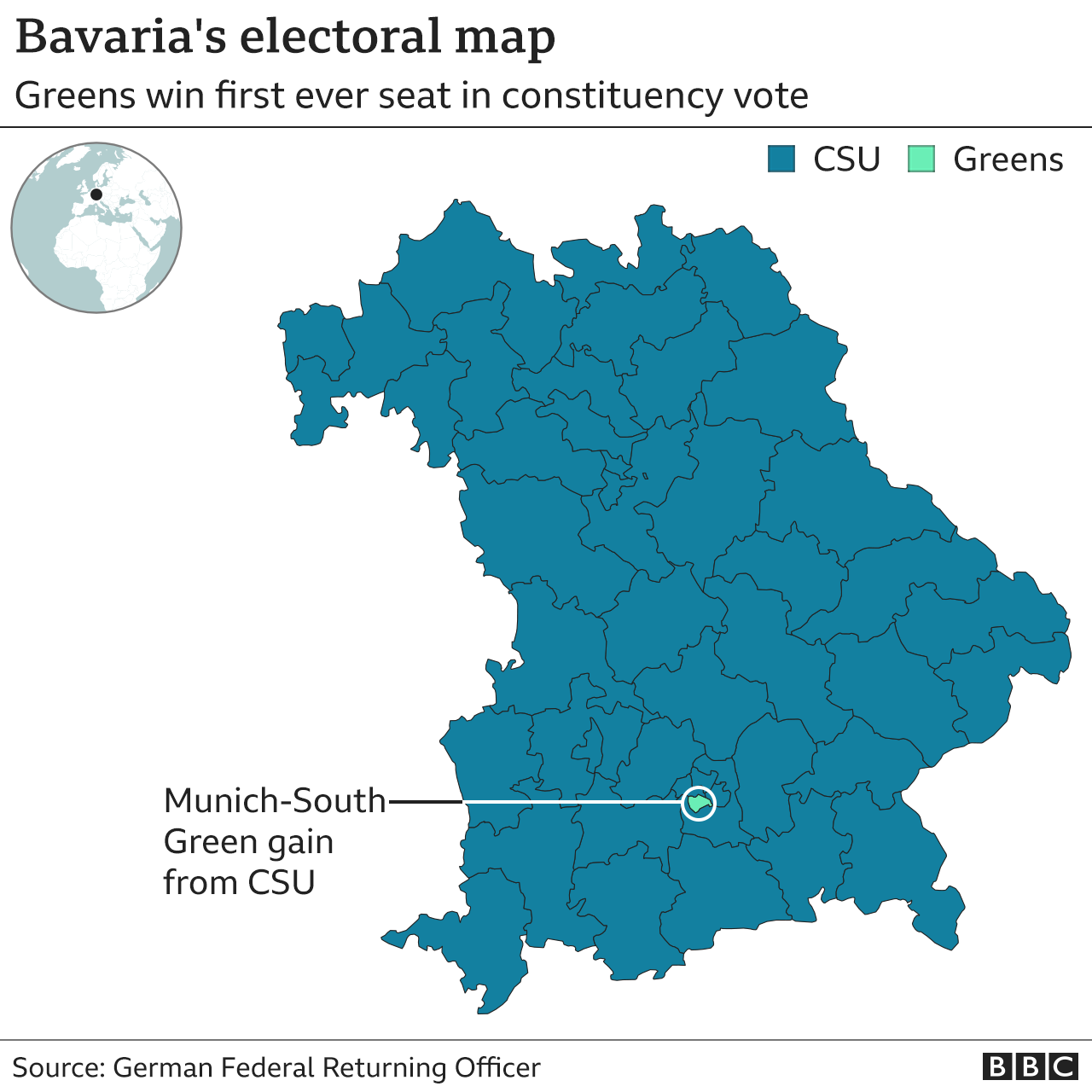


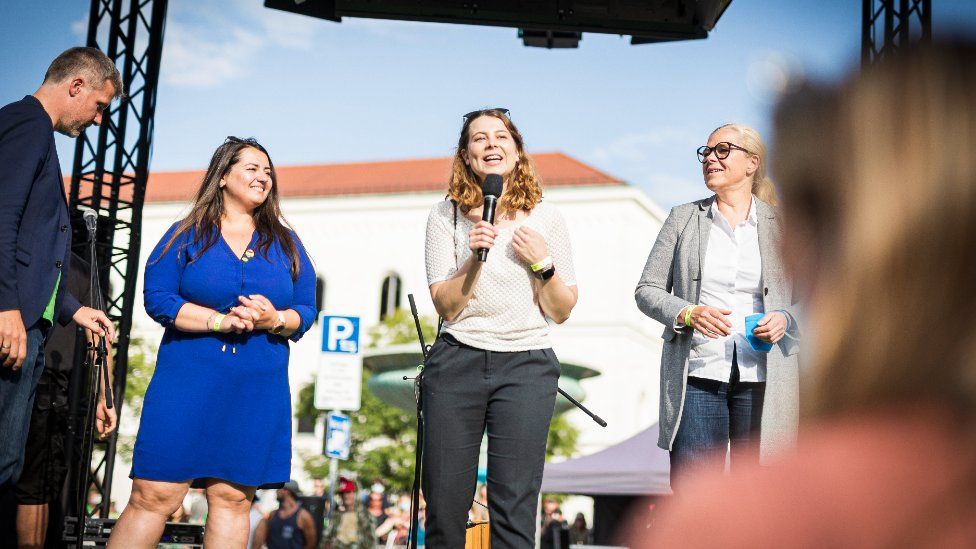
The new MP, Jamila Schäfer, was beaming with satisfaction when she recalled her surprise victory in Munich-South, by a very thin margin of 0.8%. Only once had the CSU lost the constituency since 1976.
“This is an important sign of change,” Schäfer told the BBC.
A campaign ‘close to the people’
The Greens won 14.8% of the vote nationwide, appealing beyond their eco-protest roots with Annalena Baerbock running for chancellor. They are now in talks to share power as part of a three-party coalition.

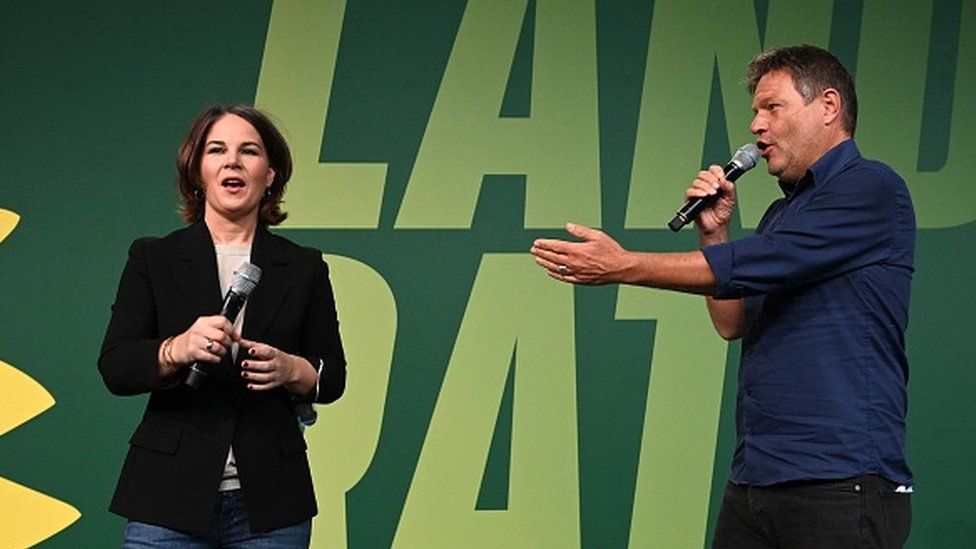
Ms. Schäfer, 28, is Federal Vice-President of the Greens and represents a party that has undergone a national makeover after years of power-sharing in several German states (Länder).
She rose through the ranks of Green Youth, taking part in school strikes against education reforms, long before Swedish activist Greta Thunberg made a name for herself by skipping classes over climate protests.
Climate change has consistently been ranked the most serious Germany faces in opinion polls ahead of the elections.
Even so, Ms Schäfer targeted her “close to the people” campaign in Munich-South on housing, pensions and taxes.
Successful green shoots
Once ridiculed by many as idealistic hippies, Green parties increased their share of votes in 13 European countries in the latest national elections. In six of these countries – Austria, Belgium, Finland, Ireland, Luxembourg and Sweden – green parties have a share of power in coalition governments.

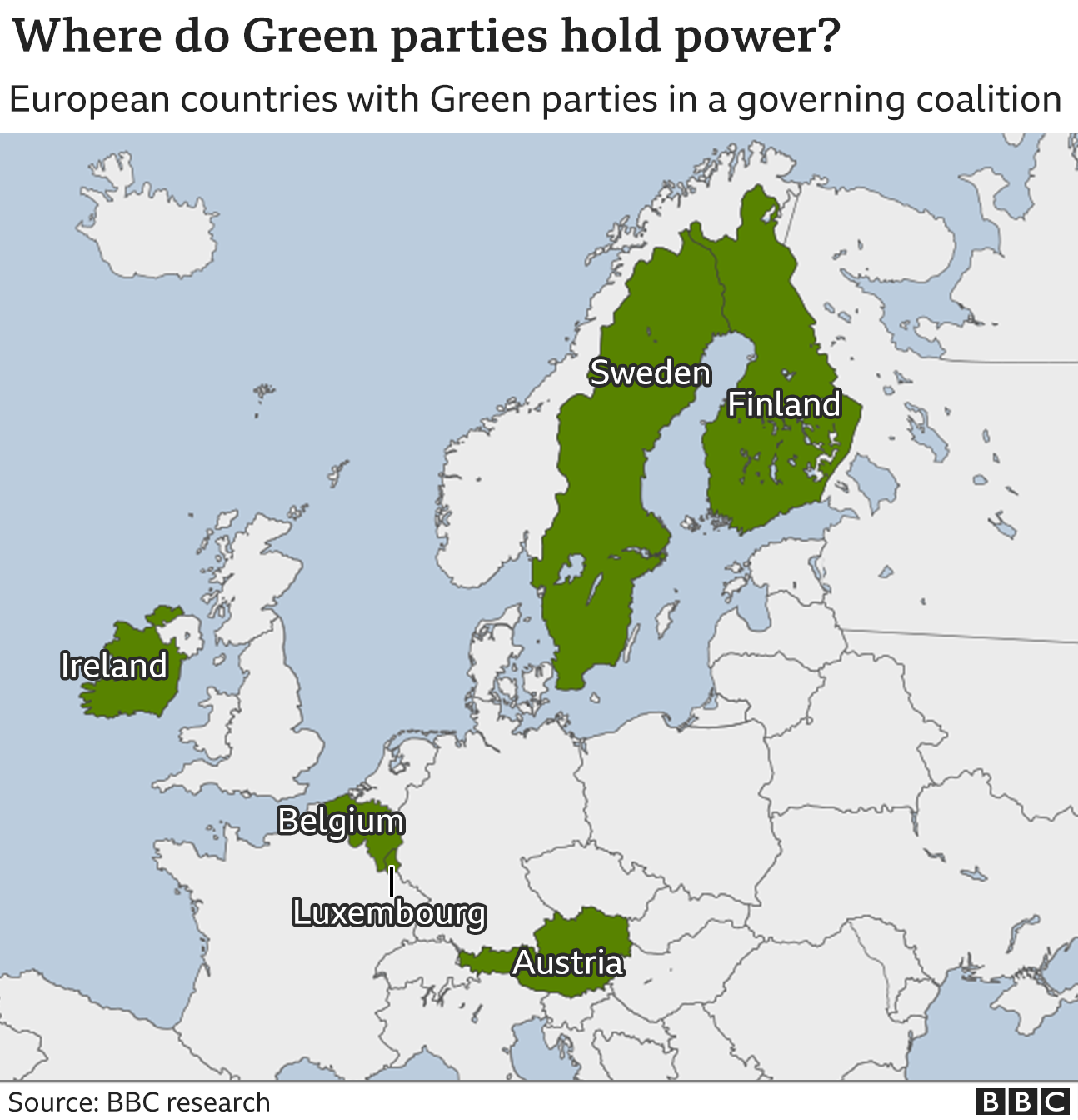
In all of these cases, the Greens are pressuring their partners to adopt more ambitious targets for reducing carbon emissions. Elsewhere, the green mayors of Amsterdam and Budapest are aiming for carbon neutrality by 2050 and 2030 respectively, to balance the greenhouse gases emitted and absorbed by their cities.
Despite last month’s electoral success for the German Greens, even the co-leader, Ms Baerbock, admitted that she did not live up to early opinion poll ratings: “We wanted more. We didn’t achieve it.” .
Given the urgency to cut emissions, what is holding back the Greens?
Trust and fear of change
One explanation is that traditional parties across Europe have raised climate change to the top of their agendas.
“If you’re worried about the climate, it doesn’t follow that you’re going to vote green,” said Adam Fagan, a political scientist at King’s College London. “It means that you will be examining the posters of the major parties for their green credentials.”

Green parties tend to do better in countries with more proportional systems, as used by the European Union for its parliamentary elections. For example, the Greens / EFA bloc gained 25 seats with 10.8% of the vote in the 2019 European Parliament elections.
“People think they are putting the Greens in power [in the EU] it is less dangerous, “said Philippe Lamberts, co-chair of the Greens / EFA.
“From right and left there is always a question hanging over us: can you really trust the Greens with the economy?”
National election results suggest the answer is no.
To reduce emissions, the Greens say that major structural changes in the economy are needed. While these reforms are necessary, they scare people off and put them off voting green, Ms Schäfer said.
“They are worried that they will be the losers of the big transformation,” the deputy said. “It’s a lack of control that people are afraid of. But we have to convince people that our policy is not about giving up control.”
“Kill the Planet”
It is even more difficult in southern and eastern European countries, where support for green parties is fragmented or non-existent. Polls show that climate change is far from a top priority in post-communist countries like Poland, the Czech Republic and Lithuania.
Voters and political parties are generally more concerned with economic development or migration, leaving environmental issues to civil society groups.
Mr. Lamberts thinks voters find the message that their country’s model “kills the planet” objectionable.
Unlike many other former Soviet bloc states, green parties have found their way into Hungary.
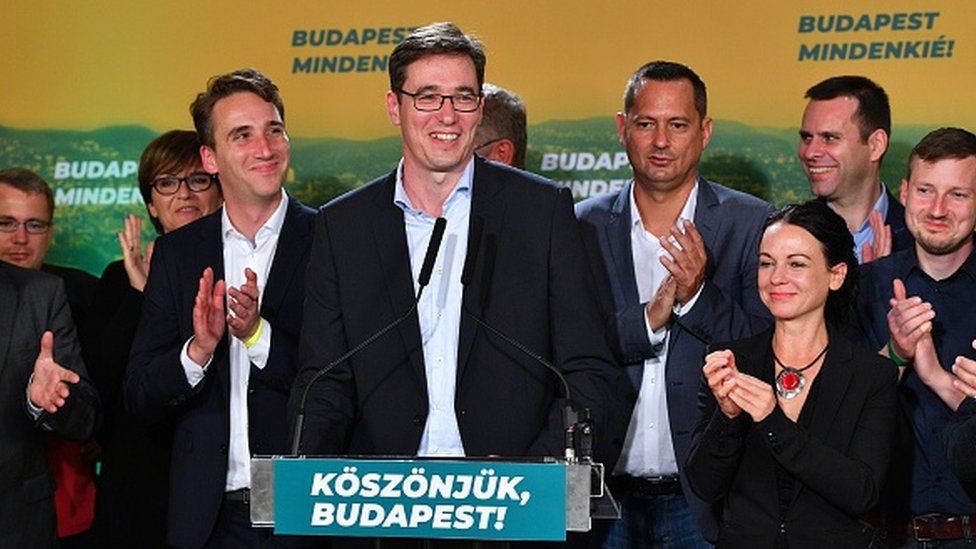
The green party LMP has won seats in three consecutive national elections since 2010, while Dialogue received 11.9% of the vote in an alliance with the Hungarian socialists in 2018.
Dialogue’s success came under the leadership of Gergely Karacsony, elected Mayor of Budapest in 2019.
He defeated the nationalist incumbent by rallying the opposition parties behind his liberal platform and promising solutions not only to environmental but also to economic and social issues.
“There are three different crises in Hungary today. A democratic crisis, a social crisis and an environmental crisis,” the mayor of Budapest told the BBC. “The advantage of the green movement is that we have proposals for all three.”
It linked green policies such as urban forestry and carbon-free public transport to Hungary’s poor performance in air quality and other environmental problems.
Especially in post-Soviet countries, the mayor said, social justice must go hand in hand with the green transition.
“We cannot put the costs of sustainability on disadvantaged segments of society.”
What worked in Budapest may not necessarily follow elsewhere, but the green candidates achieved electoral success in which they channeled voter discontent, united the opposition, and diversified their offer beyond the environment.
If the Greens can build on these gains, there is a future for them in coalitions, Professor Fagan said.
“Green policy in Europe is getting bigger and stronger, and I am sure it will grow in the next few years,” said Schäfer.
Read More about World News here.
This Article is Sourced from BBC News. You can check the original article here: Source


